
Article
The Push-Pull Cycle: Why Some Relationships Keep Ending and Restarting
Some relationships don't end once. They end on a Sunday and restart on a Thursday. Or they fade out over a few cold weeks, go quiet for months, and then a message arrives as if no time has passed. People call this push-pull: one partner comes close, then pulls away or breaks it off, then comes back.
This article explains what the cycle is, where the popular word "disorganized" comes from and why it is shakier than it sounds, and how the cycle tends to look different in the fearful-avoidant and dismissive-avoidant patterns. It ends with what research on on-again/off-again couples actually finds, and what tends to stop the loop. It describes patterns, not people. For the "what do I do" version, see the survival guides linked at the end.
What push-pull is
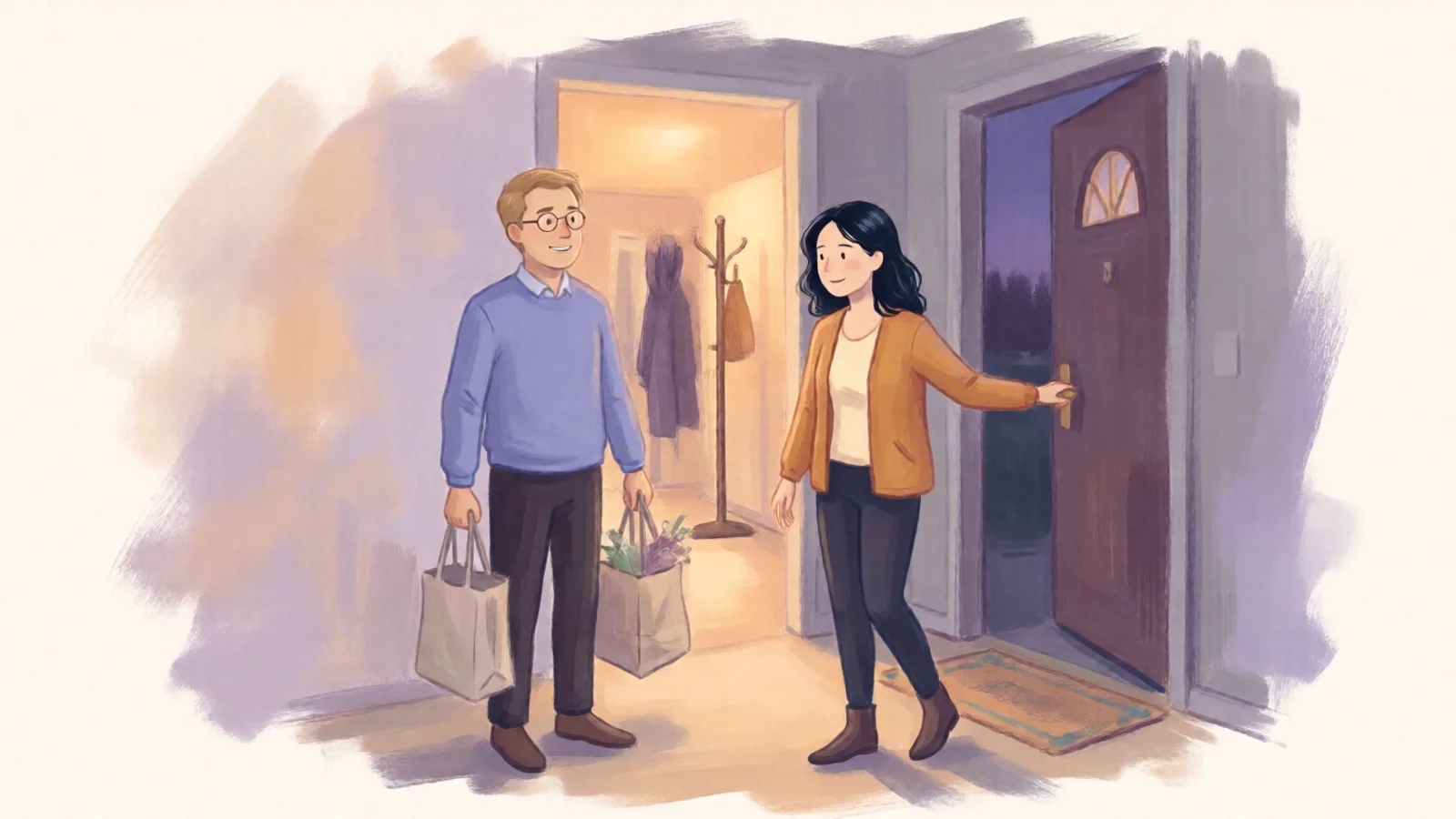
Push-pull is a repeating sequence of approach and withdrawal inside one relationship. In the pull, a partner moves closer: more contact, more warmth, plans, sometimes a full reconciliation. In the push, the same partner creates distance: slower replies, a sudden argument, "I need space", or a breakup. Then the pull starts again.
Researchers who study couples call the larger version of this on-again/off-again dating, or relationship churning. It is not rare in the samples studied. In one study of U.S. college students, almost two thirds had been in an on-again/off-again relationship at some point [1]. In a separate U.S. sample of 792 young adults who were dating or living together, nearly half reported a breakup followed by getting back together [2]. Those are figures for those samples, not for everyone.
Popular content links push-pull to avoidant attachment. Attachment research describes avoidance as two quite different strategies, and that difference matters here. Bartholomew split avoidance into a fearful kind, where the desire for closeness is real but blocked by fear of what closeness brings, and a dismissing kind, where the need for closeness itself is turned down [3][4]. Modern researchers place everyone on two sliding scales, attachment anxiety and attachment avoidance, rather than in boxes [5]. Fearful avoidance sits high on both. Dismissive avoidance sits high on avoidance and low on anxiety. That is why the two cycles feel so different.
Where "disorganized" comes from
Online, the fast push-pull cycle is often called "disorganized attachment". The word has a specific origin, and it isn't adult relationships.
It comes from infant research. Mary Main and Judith Solomon described a group of babies in Ainsworth's Strange Situation, a short lab procedure with a parent and a stranger, whose behaviour didn't fit the three known categories. They called it disorganized/disoriented [6]. Hesse and Main later described the core idea as an infant caught between contradictory urges to approach a parent and to move away from the same person [7]. That approach-and-flee image is why the word caught on as a description of adult push-pull.
The jump from babies to couples is where the evidence thins. In 2017, 43 attachment researchers, including Main, Solomon and Hesse, wrote that the infant classification should not be confused with self-report romantic styles such as fearful-avoidant, adding: "There is as yet little evidence that they refer to the same thing" [8]. They also stressed that it is not a fixed trait or a label for an individual. Researchers have only recently started building self-report measures of something like disorganization in adult relationships [9], and the link between fearful avoidance and disorganization has been proposed as a direction for future research, not settled as an equivalence [10].
So "disorganized" is popular shorthand for the fearful-avoidant push-pull, not an established finding. It describes a moment-to-moment pattern of approach and retreat. It says nothing reliable about anyone's history.
The fearful-avoidant cycle

Pace. Fast. Cycles can run in days or weeks, and several can happen in a few months.
Engine. Wanting closeness and fearing it at the same time. Bartholomew described fearful avoidance as "a conscious desire for social contact which is inhibited by fears of its consequences" [3]. Popular writing calls this oscillation: swinging between pulling people close and pushing them away [11]. When the relationship gets close, the fear side gets louder: of being hurt, of being seen too clearly, of being left. Pulling away brings relief. Then distance makes the fear of losing the other person louder, and the pull comes back. Both halves are driven by real feeling. This is an inference from attachment research about how the two scales combine, not something on-off studies have measured.
A typical sequence. Real cycles vary, but a common shape looks like this:
- The pull. Intense closeness. Long late-night conversations, big statements, plans for the future, a sense of being chosen.
- The trigger. Something raises the stakes: meeting friends, a vulnerable conversation, a small conflict, or just a very good week.
- The push. Sudden distance or a breakup, often emotional on both sides. The partner pulling away may be as distressed as the one being left.
- The gap. Days or a couple of weeks of silence or tense contact.
- The return. An apology, a strong message, relief on both sides, and often a reunion that feels more intense than before.
The heat is the tell. Both the push and the pull are emotionally loud. That is very different from the dismissive version.
The dismissive-avoidant version
Pace. Slow. The push tends to be a cool-down over weeks rather than a blow-up, and a return, when one happens, can come weeks or months later.
Engine. Turning attachment needs down when closeness or commitment rises. Bartholomew described dismissing avoidance as a defensive denial of the need for closeness, held up by a positive view of the self that minimizes awareness of distress [3]. Mikulincer and Shaver call these deactivating strategies [12]. In a large internet survey about breakups, people higher in attachment avoidance reported less distress and less effort to win the partner back, and leaned strongly toward coping alone [13]. In a cycle, that looks like calm distance, not panic.
How it differs. There is often no dramatic breakup conversation. Replies thin out, plans stop being made, and the relationship drifts into a quiet "we're not really together". The person pulling away may seem fine, which is often the hardest part for the other partner. Low distress on the surface does not mean an absence of feeling; the research describes it as feeling that has been turned down.
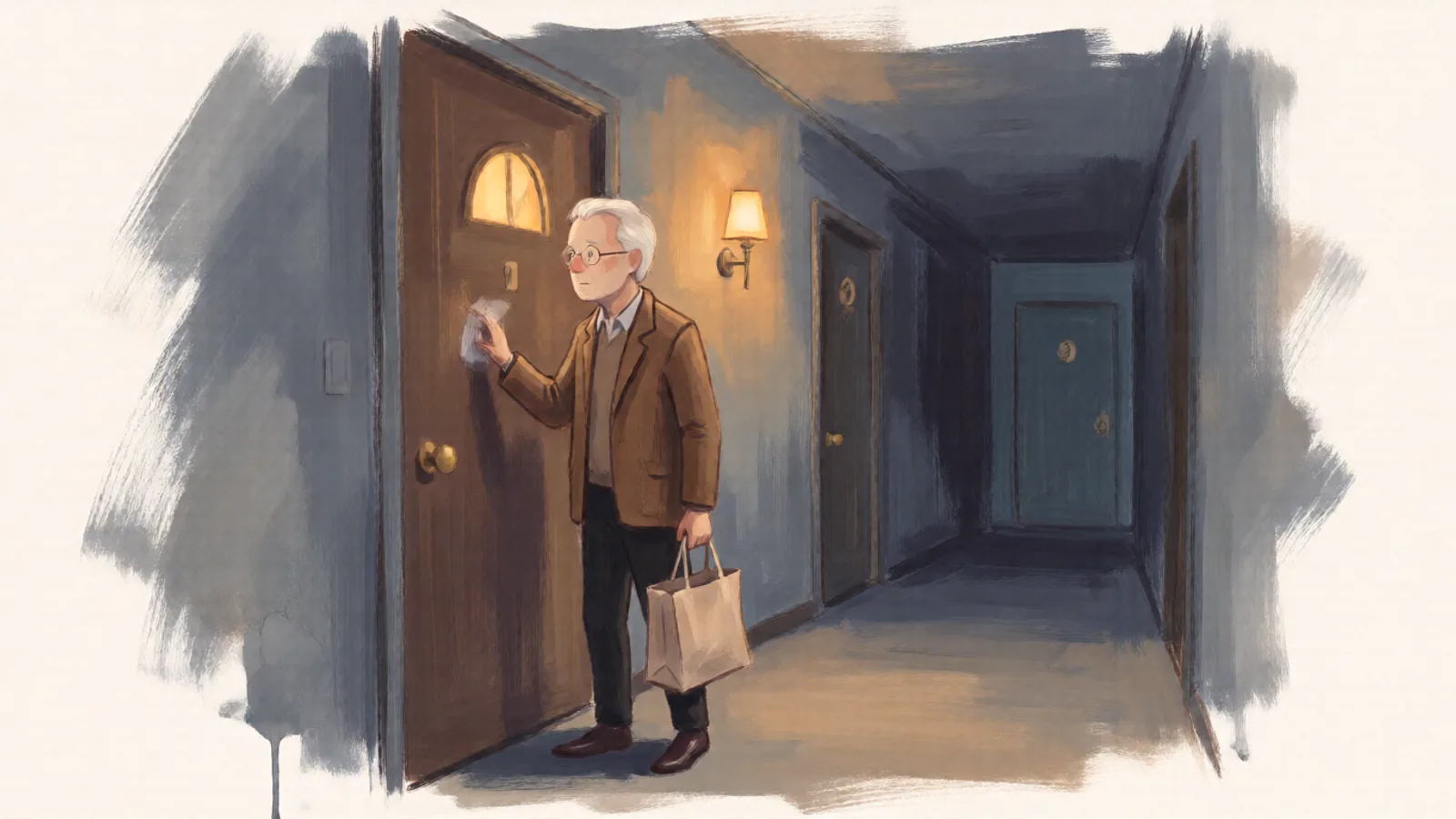
The "came back months later" pattern. Many people describe a dismissive partner who reappears long after the fade, casually: "hey, been thinking about you." No study has measured this return directly, so treat it as a recognisable story, not a finding. Two pieces of research sit near it. In one study, people whose current relationship got worse over six months longed more for an ex [14]. And across on-off couples in general, lingering feelings were the main reason people renewed [15]. One plausible reading: distance makes closeness feel safe again, or life goes flat and the old relationship looks better. Then the cooling can start again once things get close.
The two cycles side by side
| Fearful-avoidant pattern | Dismissive-avoidant pattern | |
|---|---|---|
| Two scales | High anxiety, high avoidance [3][4] | Low anxiety, high avoidance [3][4] |
| Engine | Wanting closeness and fearing it at once | Turning the need for closeness down |
| Pace | Days to weeks; several cycles in a few months | Weeks to months; a slow fade and a later return |
| The push | Sudden, emotional, often a breakup | Gradual cooling, often no clear breakup |
| Temperature | Hot on both sides | Low drama; calm distance |
| The return | Soon, often with apology and intensity | Later, often casual, as if nothing happened |
| "Disorganized" label | Popular shorthand, not settled science [8] | Not usually applied |
Both are patterns of behaviour, and people move along both scales. Plenty of people who lean one way never cycle at all, and on-off couples include every style.
What on-again/off-again research finds
This research comes mostly from communication studies and family studies, and none of the studies below measured attachment style. Linking the cycle to a style is an inference. With that limit stated, the findings are consistent:
- More renewals, more strain. On-off partners reported less love and understanding and more uncertainty and communication problems than partners who never broke up and renewed, and more renewals went with more negatives [1]. That is an average from U.S. college samples, not a rule for every couple.
- Lingering feelings drive the return. In a study of 274 people, lingering feelings were the main reason for getting back together. Renewal was also more likely when people were unsure what the breakup meant and hadn't dated anyone else, and less likely when the breakup was mutual [15].
- The breakup often isn't treated as an ending. In partners' own accounts, a breakup often redefined the relationship rather than ending it, and contact after the breakup made a return easier [16].
- The cycle runs on uncertainty. People still cycling reported more uncertainty and a more mixed view of the relationship. But some on-off couples came to see their relationship as stable [17].
- It doesn't stay in dating. In a nationally representative U.S. sample, over a third of cohabiters and a fifth of spouses reported a breakup and renewal in their current relationship. People who had cycled were more likely to cycle again and felt less certain about the future [18].
One wider caution. Across 43 couples studies, attachment anxiety and avoidance did predict relationship quality, but how people felt about the relationship itself predicted far more [19]. A style shapes the cycle. It doesn't decide the outcome.
What helps break the cycle

The research points to a few things that make a cycle less likely to restart. These are general patterns, not promises.
Clear endings. Uncertainty about what a breakup means keeps the door open, and mutual, clearly agreed breakups were less likely to be followed by a renewal [15]. A breakup that both people name as final behaves differently from "I need some space".
Less in-between contact. Contact after a breakup was one of the things that made getting back together easier [16]. Staying friends straight away, checking in, and late-night messages keep the relationship half alive.
Naming the pattern out loud. In the fearful-avoidant cycle, saying "this is the part where one of us pulls away" can take some of the heat out of the push. In the dismissive version, naming the fade early ("things have gone quiet; is this a slowdown or an ending?") replaces drift with a decision.
Deciding before the return, not during it. The return is when lingering feelings are strongest. People who decide in a calm moment what would have to be different, and what they won't do again, tend to have an easier time holding to it than those deciding in the middle of a reunion.
Accepting that both outcomes happen. Some on-off couples settle into stability [17]. Some keep cycling for years, into living together and marriage [18]. The cycle is not proof that a relationship is wrong, and it is not proof that it will change. The survival guides below cover the next steps from each side.
Sources (19)
- Dailey, R. M., Pfiester, A., Jin, B., Beck, G., & Clark, G. (2009). On-again/off-again dating relationships: How are they different from other dating relationships? Personal Relationships, 16(1), 23–47. https://doi.org/10.1111/j.1475-6811.2009.01208.x (abstract; accessed 2026-10-05)
- Halpern-Meekin, S., Manning, W. D., Giordano, P. C., & Longmore, M. A. (2013). Relationship churning in emerging adulthood: On/off relationships and sex with an ex. Journal of Adolescent Research, 28(2), 166–188. https://doi.org/10.1177/0743558412464524 (abstract; accessed 2026-10-05)
- Bartholomew, K. (1990). Avoidance of intimacy: An attachment perspective. Journal of Social and Personal Relationships, 7(2), 147–178. https://doi.org/10.1177/0265407590072001 (abstract; accessed 2026-10-05)
- Bartholomew, K., & Horowitz, L. M. (1991). Attachment styles among young adults: A test of a four-category model. Journal of Personality and Social Psychology, 61(2), 226–244. https://doi.org/10.1037/0022-3514.61.2.226 (abstract; accessed 2026-10-05)
- Fraley, R. C. A Brief Overview of Adult Attachment Theory and Research. https://labs.psychology.illinois.edu/~rcfraley/attachment.htm (accessed 2026-10-05)
- Main, M., & Solomon, J. (1990). Procedures for identifying infants as disorganized/disoriented during the Ainsworth Strange Situation. In Attachment in the Preschool Years (pp. 121–160). University of Chicago Press. Reissued 2026, Routledge. https://doi.org/10.4324/9781003569978-2 (metadata only; accessed 2026-10-05)
- Hesse, E., & Main, M. (2000). Disorganized infant, child, and adult attachment: Collapse in behavioral and attentional strategies. Journal of the American Psychoanalytic Association, 48(4), 1097–1127. https://doi.org/10.1177/00030651000480041101 (abstract; accessed 2026-10-05)
- Granqvist, P., Sroufe, L. A., Dozier, M., Hesse, E., Steele, M., van IJzendoorn, M., Solomon, J., et al. (2017). Disorganized attachment in infancy: A review of the phenomenon and its implications for clinicians and policy-makers. Attachment & Human Development, 19(6), 534–558. https://doi.org/10.1080/14616734.2017.1354040 (abstract and open-access full text; accessed 2026-10-05)
- Paetzold, R. L., Rholes, W. S., & Kohn, J. L. (2015). Disorganized attachment in adulthood: Theory, measurement, and implications for romantic relationships. Review of General Psychology, 19(2), 146–156. https://doi.org/10.1037/gpr0000042 (abstract; accessed 2026-10-05)
- Simpson, J. A., & Rholes, W. S. (2002). Fearful-avoidance, disorganization, and multiple working models: Some directions for future theory and research. Attachment & Human Development, 4(2), 223–229. https://doi.org/10.1080/14616730210154207 (metadata only; accessed 2026-10-05)
- Levine, A. Author website. https://www.amirlevinemd.com/ (accessed 2026-10-05)
- Mikulincer, M., & Shaver, P. R. (2003). The attachment behavioral system in adulthood: Activation, psychodynamics, and interpersonal processes. Advances in Experimental Social Psychology, 35, 53–152. https://doi.org/10.1016/S0065-2601(03)01002-5 (metadata only; accessed 2026-10-05)
- Davis, D., Shaver, P. R., & Vernon, M. L. (2003). Physical, emotional, and behavioral reactions to breaking up: The roles of gender, age, emotional involvement, and attachment style. Personality and Social Psychology Bulletin, 29(7), 871–884. https://doi.org/10.1177/0146167203029007006 (abstract; accessed 2026-10-05)
- Spielmann, S. S., Joel, S., MacDonald, G., & Kogan, A. (2013). Ex appeal: Current relationship quality and emotional attachment to ex-partners. Social Psychological and Personality Science, 4(2), 175–180. https://doi.org/10.1177/1948550612448198 (abstract; accessed 2026-10-05)
- Dailey, R. M., Jin, B., Pfiester, A., & Beck, G. (2011). On-again/off-again dating relationships: What keeps partners coming back? The Journal of Social Psychology, 151(4), 417–440. https://doi.org/10.1080/00224545.2010.503249 (abstract; accessed 2026-10-05)
- Dailey, R. M., Rossetto, K. R., Pfiester, A., & Surra, C. A. (2009). A qualitative analysis of on-again/off-again romantic relationships: "It's up and down, all around." Journal of Social and Personal Relationships, 26(4), 443–466. https://doi.org/10.1177/0265407509351035 (abstract; accessed 2026-10-05)
- Dailey, R. M., Middleton, A. V., & Green, E. W. (2012). Perceived relational stability in on-again/off-again relationships. Journal of Social and Personal Relationships, 29(1), 52–76. https://doi.org/10.1177/0265407511420192 (abstract; accessed 2026-10-05)
- Vennum, A., Lindstrom, R., Monk, J. K., & Adams, R. (2014). "It's complicated": The continuity and correlates of cycling in cohabiting and marital relationships. Journal of Social and Personal Relationships, 31(3), 410–430. https://doi.org/10.1177/0265407513501987 (abstract; accessed 2026-10-05)
- Joel, S., Eastwick, P. W., et al. (2020). Machine learning uncovers the most robust self-report predictors of relationship quality across 43 longitudinal couples studies. PNAS, 117(32), 19061–19071. https://doi.org/10.1073/pnas.1917036117 (abstract; accessed 2026-10-05)
Keep going
Dismissive-Avoidant Push-Pull, for an Anxious Partner: The Survival Guide
They fade out over weeks, go quiet for months, then text like nothing happened. Why the slow cycle hooks an anxious heart, and how to get…
Why: hand-picked as a companion
Dismissive-Avoidant Push-Pull, for a Dismissive-Avoidant Partner: The Guide
They fade, you let them, and months later they're back like nothing happened. Why the quiet cycle feels easy to you, and how to step off it…
Why: hand-picked as a companion
Dismissive-Avoidant Push-Pull, for a Fearful-Avoidant Partner: Survival Guide
A slow fade, months of quiet, then 'hey, been thinking about you'. Why the dismissive cycle fits your own fears so neatly, and how to stop…
Why: hand-picked as a companion
More like this
- GuideDismissive-Avoidant Push-Pull, for a Secure Partner: The Survival Guide
- GuideFearful-Avoidant Push-Pull, for an Anxious Partner: The Survival Guide
- GuideFearful-Avoidant Push-Pull, for a Dismissive Partner: The Survival Guide
- GuideFearful-Avoidant Push-Pull, for a Fearful-Avoidant Partner: The Guide
- GuideFearful-Avoidant Push-Pull, for a Secure Partner: The Survival Guide
- QuizIs your ex an avoidant?
- GuideAnxious With a Dismissive-Avoidant Partner: The Survival Guide
- GuideDismissive-Avoidant With a Dismissive-Avoidant Partner: The Survival Guide
- GuideFearful-Avoidant With a Dismissive-Avoidant Partner: The Survival Guide