
Chapter 7 of 8 · Back to push-pull
Fearful-Avoidant Push-Pull, for a Secure Partner: The Survival Guide
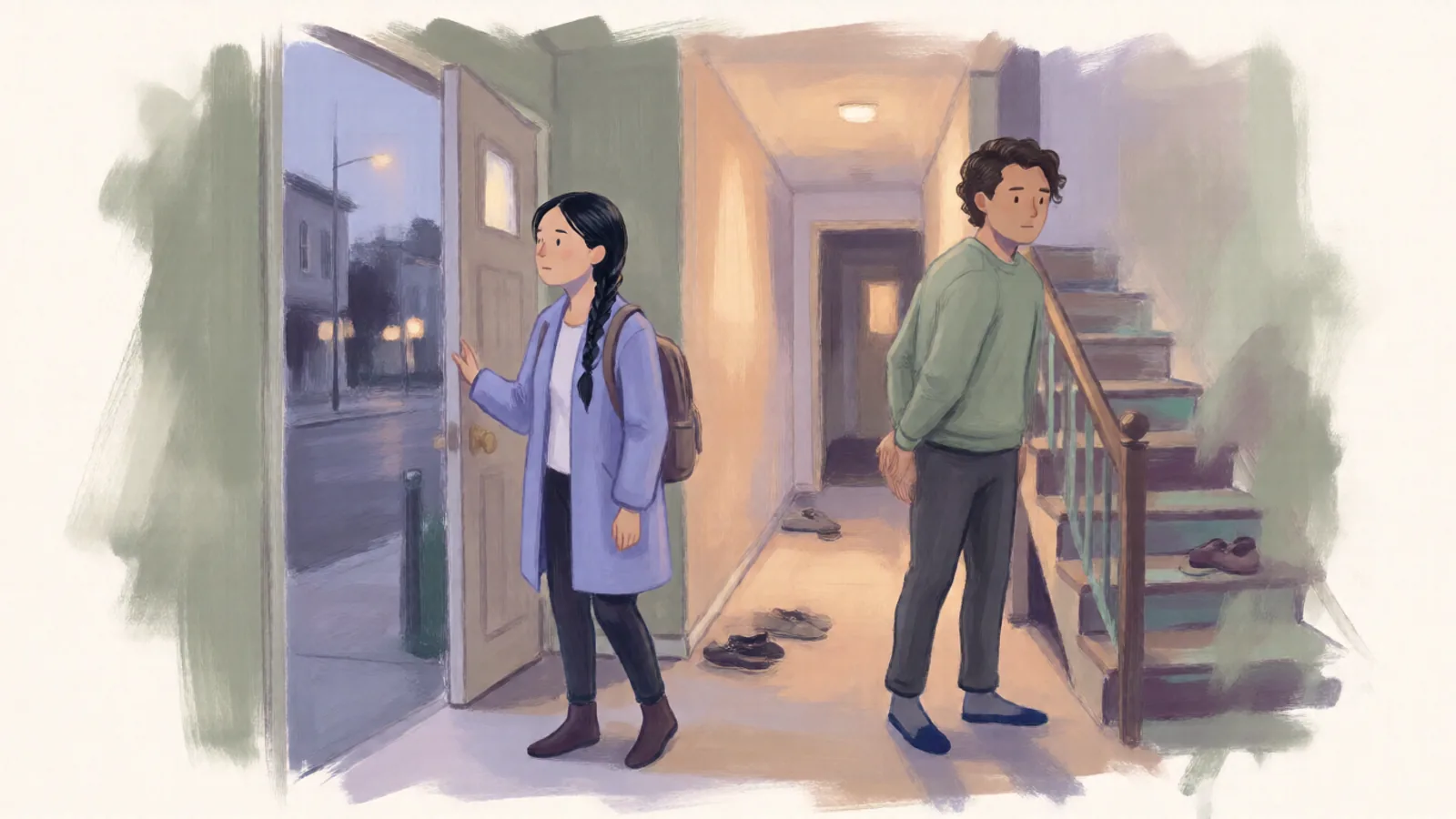
It's 11:52 pm on a Tuesday, nineteen days after they said "i can't do this, i'm sorry, it's not you." Your phone lights up: "i've been sitting outside your building for ten minutes. can i come up. i just need to see you." You're not panicking. You're not even surprised. You're tired, in the specific way a calm person gets tired when the same door keeps opening and closing.
This guide is about that door: why it swings, why it wears down even a steady person, and how to decide whether you keep standing in it.
What the cycle looks like
The pull
They come back hot, not casual. A long voice note at 1 am: "i was scared and i ran and i hate that i did that to you." They show up with your favourite coffee. For a week or two it's the best version of the relationship: talk about a trip, meeting their friends, "i've never felt this safe with anyone." They mean it. You can hear that they mean it, which is why it's so hard to hold the last breakup against them. You tell yourself what secure people tell themselves: people struggle, people repair, this is the repair.
The push
Then something ordinary tips it. You meet their sister. They say "i love you" first and go quiet straight after. Friday 6:10 pm: "can we talk tonight." By 9 pm they're crying and ending it: "you deserve someone who isn't like this." You stay calm and ask what changed. Nothing changed, they say, and that's the problem. They're as upset as you are, maybe more. They leave, and by Sunday they've muted the chat but not deleted it. It doesn't feel like being dumped. It feels like watching someone run from a building that isn't on fire.
The timeline
Real cycles vary in length and in who starts each phase. This is one recognisable shape.
- Week 1: The pull. Daily calls, plans for a weekend away, "i'm all in this time."
- Week 3: The weekend happens and it's great. Two days later their replies shorten and they cancel dinner with "work stuff."
- Week 4: The breakup. A crying phone call, "i'm no good at this, i'm letting you go before i hurt you."
- Weeks 5-6: Near silence, broken by one late-night "hope you're ok" that you answer kindly.
- Week 7: The return. They're at your door with an apology and a plan, and the pull starts again.
- Months 2-4: Two more rounds, each a little shorter on the close side.
Why your partner does this
Attachment researcher Kim Bartholomew described fearful avoidance as a "conscious desire for social contact which is inhibited by fears of its consequences" [1]. In the four-category model it sits high on both worry about being left and discomfort with closeness, with a shaky view of the self and a guarded view of others [2]. So two alarms are wired up at once. When closeness rises, the alarm about being exposed or hurt goes off, and leaving brings relief. When the distance sets in, the alarm about losing you goes off, and coming back brings relief. Each move is a real attempt to feel safe. It's a strategy, not a scheme.
You'll see this pattern called "disorganized attachment" online. That word comes from research on infants, and attachment researchers have written that there is "as yet little evidence" that it and adult self-report styles refer to the same thing [3]. Treat it as popular shorthand, not a label for your partner.
The on-again/off-again research didn't measure attachment at all, but what it found fits this cycle. On-off partners report more uncertainty and communication problems, and in one college sample more renewals went with more negatives [4].
Why it hooks you

You're not hooked the way an anxious partner is. The breakup doesn't flood you, and the return doesn't feel like rescue. Your hook is quieter: you believe in repair, and they keep offering it. Every return comes with a real apology, and a secure person is built to accept a real apology. You also don't punish, so coming back to you is cheap. That's a strength in most relationships. Here it means you're the safe harbour the cycle keeps sailing back to.
Lingering feelings were the main reason people in one study renewed an on-off relationship, and renewals were more likely when the breakup's meaning was unclear [5]. Your kindness during the off weeks keeps both of those alive. Partners can buffer someone's insecurity and help them behave more constructively [8]. That's real, but buffering is something you choose, not a duty to absorb unlimited rounds. The cost shows up slowly: you start bracing after good weekends, and you stop making plans past next month.
Surviving a push phase
When they end it, believe them for now. Don't argue them out of it, and don't rush to reassure them that they're not "like this." That makes you the one holding the relationship together while they're actively leaving it. Say one clear, warm thing, then let the breakup be a breakup.
In the days after, keep contact minimal. The late-night "hope you're ok" texts feel harmless, and you answer them because you're decent. But contact after a breakup is one of the things that kept the door open for on-off couples [6]. You don't have to be cold. You just don't have to be available at midnight.
Use the quiet to notice how you actually feel without them, not how you feel about them. Is it relief? Grief? Both?
ok. i hear you. i'm not going to try to change your mind tonight. take care of yourself.
Surviving a pull phase
When they come back, you don't have to say no, and you don't have to say yes that night. A secure person can be glad to see someone and still need a conversation before stepping back in. Ask what's different this time, in concrete terms. "I missed you" is a feeling, not a plan.
Watch what they do in the weeks after the return, not what they say at the door. If the next push starts the moment things get close again, that's information about the cycle, not a reason to try harder.
Name the cycle itself, gently, so the return isn't treated like a fresh start with no history:
i'm really glad you're here. and this is the third time we've done this. before we pick up again i need to talk about what happens next time it gets close.
Getting off the cycle
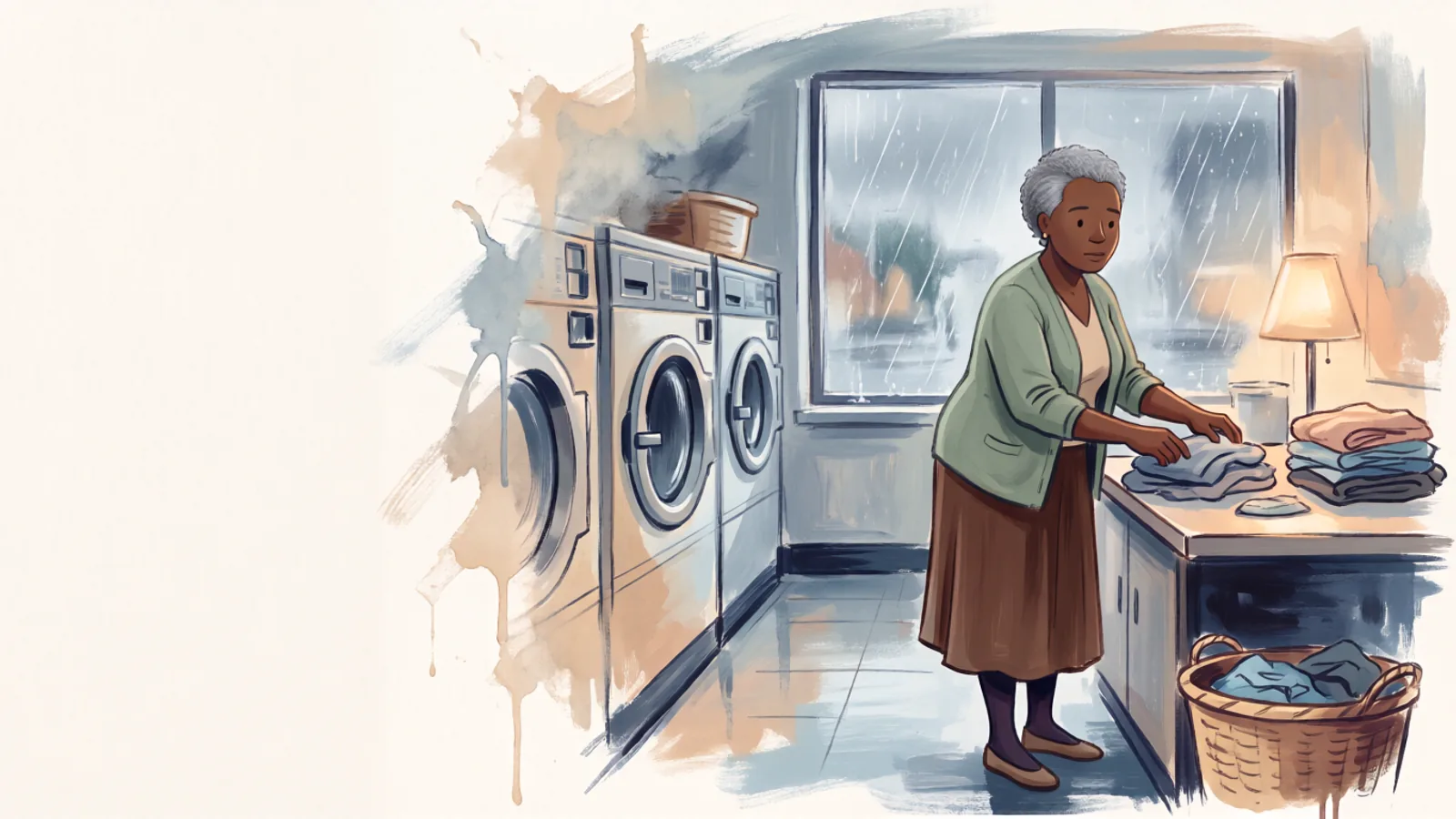
The on-off research points to a few levers. Unclear breakups and lingering feelings drive renewals, and mutually agreed endings made a renewal less likely [5]. Ongoing contact and uncertainty about whether it was really over made getting back together easier [6]. Cycling also tends to repeat, even after moving in or marrying [7]. You can't fix the engine in your partner. You can change what the cycle runs on.
- Decide your limit before the next return. Pick the number of rounds, or the kind of breakup, you'll accept. Decide it on a calm day, alone, so it isn't made at 11:52 pm on your doorstep.
- Name the boundary out loud, once. Not a threat, just a fact about you. Say it during a pull phase, when they can hear it.
- Make the next ending clear and shared. If it ends again, agree that it's over and say so in plain words, rather than leaving it as "a break."
- Cut the in-between contact. No "hope you're ok", no shared playlists, no checking in. Not to punish anyone; just so the ending can actually end.
- Keep your life full in the on weeks too. If your plans only happen when they're away, the cycle owns your calendar.
The boundary, said plainly:
i care about you and i'm not going anywhere tonight. but if you end it again, i'm treating it as the end. i can't keep doing the door.
If they come back after that:
i meant what i said last time. i hope you're ok, and i'm not getting back together.
None of this changes your partner. It changes your side of the door. Some on-off couples do settle into something stable; others keep cycling for years, even into living together and marriage [7]. Your boundary is what tells you which one you're in.
When to step off for good
- You've had the same "what's different this time?" talk three times, and nothing has been different.
- The close stretches are getting shorter and the breakups faster.
- You've started bracing after good weekends instead of enjoying them.
- You haven't made a plan more than a month out in a year.
Stepping off isn't a move to make them come back, and it isn't a failure of your steadiness. It's a clean ending to a cycle you didn't start. Whether you stay is your call.
Sources (8)
- Bartholomew, K. (1990). Avoidance of intimacy: An attachment perspective. Journal of Social and Personal Relationships, 7(2), 147–178. https://doi.org/10.1177/0265407590072001 (abstract; accessed 2026-10-05)
- Bartholomew, K., & Horowitz, L. M. (1991). Attachment styles among young adults: A test of a four-category model. Journal of Personality and Social Psychology, 61(2), 226–244. https://doi.org/10.1037/0022-3514.61.2.226 (abstract; accessed 2026-10-05)
- Granqvist, P., Sroufe, L. A., Dozier, M., Hesse, E., Steele, M., van IJzendoorn, M., Solomon, J., ... Duschinsky, R. (2017). Disorganized attachment in infancy: A review of the phenomenon and its implications for clinicians and policy-makers. Attachment & Human Development, 19(6), 534–558. https://doi.org/10.1080/14616734.2017.1354040 (accessed 2026-10-05)
- Dailey, R. M., Pfiester, A., Jin, B., Beck, G., & Clark, G. (2009). On-again/off-again dating relationships: How are they different from other dating relationships? Personal Relationships, 16(1), 23–47. https://doi.org/10.1111/j.1475-6811.2009.01208.x (abstract; accessed 2026-10-05)
- Dailey, R. M., Jin, B., Pfiester, A., & Beck, G. (2011). On-again/off-again dating relationships: What keeps partners coming back? The Journal of Social Psychology, 151(4), 417–440. https://doi.org/10.1080/00224545.2010.503249 (abstract; accessed 2026-10-05)
- Dailey, R. M., Rossetto, K. R., Pfiester, A., & Surra, C. A. (2009). A qualitative analysis of on-again/off-again romantic relationships: "It's up and down, all around." Journal of Social and Personal Relationships, 26(4), 443–466. https://doi.org/10.1177/0265407509351035 (abstract; accessed 2026-10-05)
- Vennum, A., Lindstrom, R., Monk, J. K., & Adams, R. (2014). "It's complicated": The continuity and correlates of cycling in cohabiting and marital relationships. Journal of Social and Personal Relationships, 31(3), 410–430. https://doi.org/10.1177/0265407513501987 (abstract; accessed 2026-10-05)
- Simpson, J. A., & Overall, N. C. (2014). Partner buffering of attachment insecurity. Current Directions in Psychological Science, 23(1), 54–59. https://doi.org/10.1177/0963721413510933 (abstract; accessed 2026-10-05)
Keep going
Secure With a Fearful-Avoidant Partner: The Survival Guide
They pull you close, then go quiet. How to be the steady one without holding the whole relationship together by yourself.
Why: hand-picked as a companion
Fearful-Avoidant Push-Pull, for an Anxious Partner: The Survival Guide
They pull you close, end it in tears, then come back weeks later. Why this fast cycle grips an anxious partner, and how to get off it.
Why: hand-picked as a companion
The Push-Pull Cycle: Why Some Relationships Keep Ending and Restarting
Why some couples break up and get back together again and again: the fast fearful-avoidant cycle, the slow dismissive fade and return, and…
Why: hand-picked as a companion
More like this
- Guide Dismissive-Avoidant Push-Pull, for a Secure Partner: The Survival Guide
- Guide Anxious With a Fearful-Avoidant Partner: The Survival Guide
- Guide Dismissive-Avoidant With a Fearful-Avoidant Partner: The Survival Guide
- Guide Fearful-Avoidant Push-Pull, for a Dismissive Partner: The Survival Guide
- Guide Fearful-Avoidant Push-Pull, for a Fearful-Avoidant Partner: The Guide
- Guide Fearful-Avoidant With a Fearful-Avoidant Partner: The Survival Guide
- Quiz Is your ex an avoidant?
- Term Hot and cold (push-pull)
- Guide Secure With a Dismissive-Avoidant Partner: The Survival Guide