
Chapter 6 of 8
Secure With a Fearful-Avoidant Partner: The Survival Guide
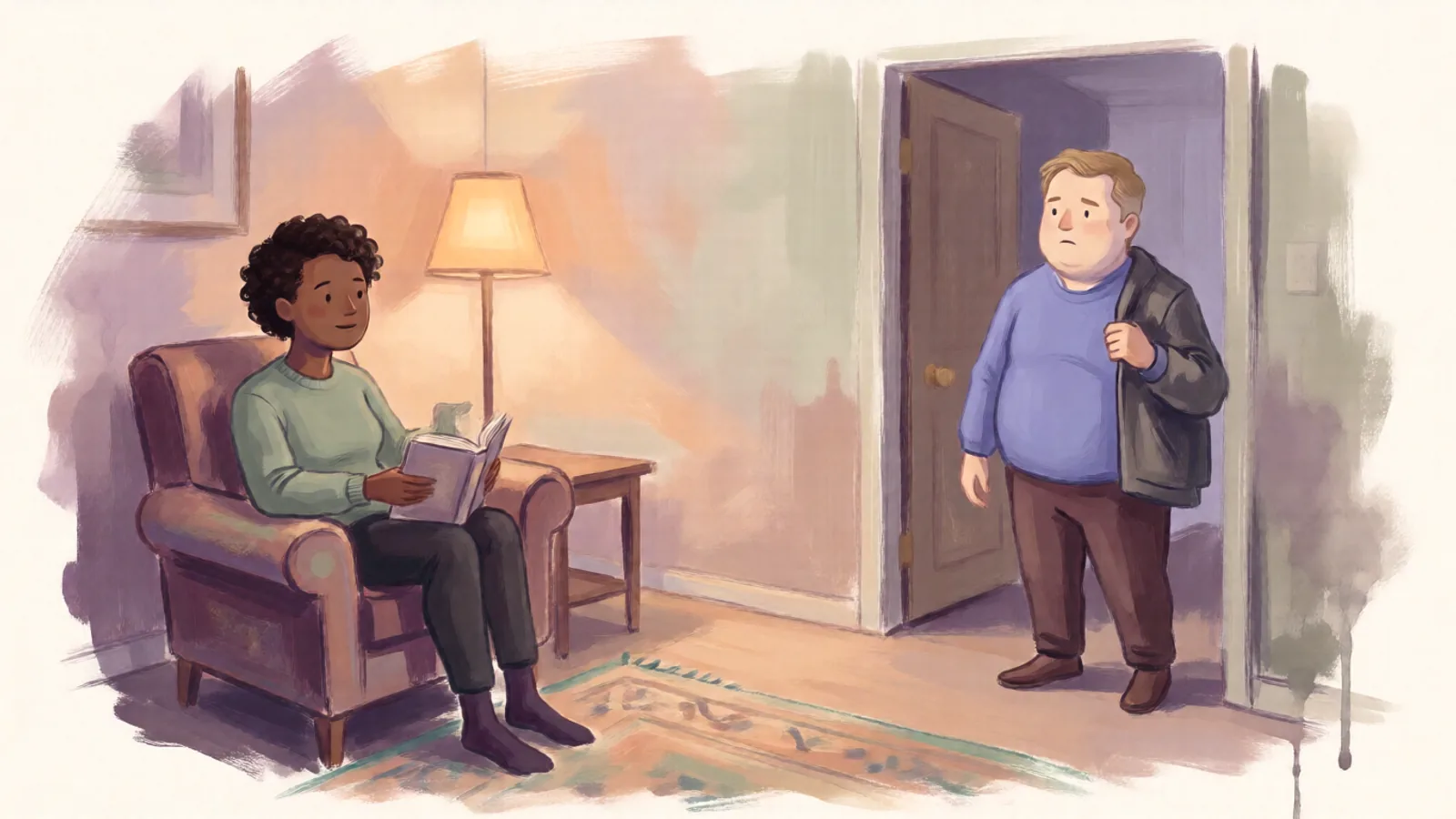
Saturday was the best day you've had together. Long breakfast, a walk that turned into four hours, them saying "i don't want this to end" on the train home. Sunday they're quiet. Monday your "morning, how's your head?" gets a thumbs up at 2:15 pm. You didn't do anything. You know you didn't. You're still standing in the space between Saturday and Monday, trying to work out which one was real.
Both were. This guide explains the swing, what you can do about it, and what isn't yours to fix.
How you're each wired
Attachment styles aren't boxes. Researchers describe them as positions on two sliding scales: how much you worry about being left (anxiety) and how uncomfortable you are with closeness and depending on someone (avoidance) [1]. You sit low on both. Your partner sits high on both. That combination is what makes this pairing feel so uneven.
You: Secure A late reply is a late reply to you. You can say what you need without rehearsing it, you can take space without reading it as rejection, and after a fight you assume repair is possible. That doesn't make you unbreakable. It means your default when something feels off is to ask, not to panic or vanish. You also tend to trust what people show you, which is exactly why a partner who shows you two different things in two days is so disorienting.
Them: Fearful-avoidant In Bartholomew's account, fearful avoidance is wanting closeness while being held back by fear of what closeness might cost [2]. It goes with a shakier view of yourself and a guarded view of other people [3]. So two alarms are wired up at once. When you're distant, the fear of being left goes off. When you're close, the fear of being exposed goes off. Popular writing calls this oscillation: swinging between pulling people close and pushing them away [4]. It's a learned strategy for handling a world that once felt unsafe from both directions, not a judgement on you and not an absence of feeling. If anything, they're feeling a lot.
What draws you together

The honest pull is that you're calm and they're intense, and both of those feel good at first. With you, they get something they rarely get: a person who doesn't punish distance and doesn't flood them with need. You get a partner who, on the close days, is open and deep and grateful in a way that makes you feel truly seen. Their intensity can read as passion. Your steadiness can read, to them, as the safe place they've been looking for. There's no research showing these two styles seek each other out. But it's easy to see why the early weeks can feel unusually meaningful to both of you.
Where it goes wrong
The texts
Thursday, 10:40 pm, after a long phone call: "honestly you're the best thing that's happened to me this year." You reply, warmly, and mean it. Friday you send "dinner saturday still on?" at 12:05. By 6 pm, nothing. At 9:30 pm: "sorry been slammed, maybe next week?" Your instinct is to answer simply, and you do. On their side, Thursday's openness felt like stepping off a ledge. Friday's silence was them climbing back up. Your easy reply lowers the panic, but if nobody names the swing, it starts to feel normal to both of you.
The arguments
You raise it calmly: "I noticed you went quiet after Saturday. What's going on?" For a secure person, that's an ordinary question. For a fearful partner, it can land as proof they've been found out. Sometimes they push back: "why are you keeping score?" Sometimes they collapse: "I knew I'd ruin this." Sometimes both, ten minutes apart. Couples researchers describe a loop where one partner presses for change and the other retreats [5]. Here it's messier, because your partner can be the one pressing and the one retreating in the same conversation. You end up managing their reaction instead of talking about the thing you raised.
The distance
You plan a weekend away. Two days before, they find a reason it doesn't work, or they come and spend the first night tense and distant, then the second night clinging. Holidays with family get booked, cancelled, rebooked. Talk about the future goes well over dinner and then gets walked back by text the next morning: "i think i got ahead of myself last night." You give space because that's what secure people do. The risk is that you give so much space, so patiently, that you slowly stop asking for anything at all.
What each of you needs

What you need You need consistency you can plan around: not perfection, but a pattern that isn't a coin toss. You need the swings to be talked about, not just survived. You need your own wants to count, not to be permanently on hold while you wait for them to feel safe enough. And you need to keep feeling like yourself: a relationship that slowly turns a calm person into a watchful one isn't working, however good the close days are.
What they need They need closeness that doesn't trap them, and space that doesn't mean the end. They need to hear that a pull-back can be survived without a big fight or a punishment. They need you to stay the same person on Monday that you were on Saturday, because that's the evidence that slowly teaches them closeness is safe. They also need room to name both pulls ("part of me wants you closer and part of me wants to run") without that becoming a crisis.
Survival strategies
- Name the pattern on a calm day, not in the middle of a swing. Pick a low-stakes moment, a walk or a quiet evening, and describe what you've noticed without blame: the closeness, the pull-back, the return. Ask what it's like from their side. You're not labelling them. You're making the swing something you can both see.
- Agree on a minimum signal for the quiet days. Distance is easier for both of you when it's announced. Something like "i need a couple of days, i'm ok, we're ok" turns a silence that worries you into a pause you can live with. Ask for it once, clearly, and then notice whether it happens.
- Respond to the return without a trial. When they come back after going quiet, greet them like you're glad, and keep the conversation about the pattern for a calm day (step 1). If every return costs them a hard conversation, coming back gets harder and the pulling away gets longer.
- Keep your own life full. Friends, plans, your own weekends. Not as a tactic, but because a secure person who has rearranged everything around someone else's swings has stopped being secure. It also takes pressure off them: you're not waiting by the phone, so their distance doesn't feel like a wound they've caused.
- Set your own limit, privately first. Decide what a swing you can live with looks like (a quiet day? a cancelled weekend? a month of walk-backs?) and what isn't. You don't have to announce it as an ultimatum. You just have to know it, so you're choosing to stay rather than drifting.
- Know that leaving is a real option. If the swings don't shrink, and talking about them doesn't change anything, you can end it calmly. That's not failing them. It's you taking your own needs as seriously as you've taken theirs.
A text for the quiet day:
hey, no pressure to talk. just want you to know i'm still here and saturday was great. text me when you're ready
What to say when a calm question turns into a spiral:
I'm not angry and I'm not going anywhere tonight. I just want us to be able to talk about the quiet days. We can do it tomorrow if now's too much.
And if you've reached your limit:
I care about you, and I've realised I can't keep living between the close days and the gone days. I need to step out of this.
When it works
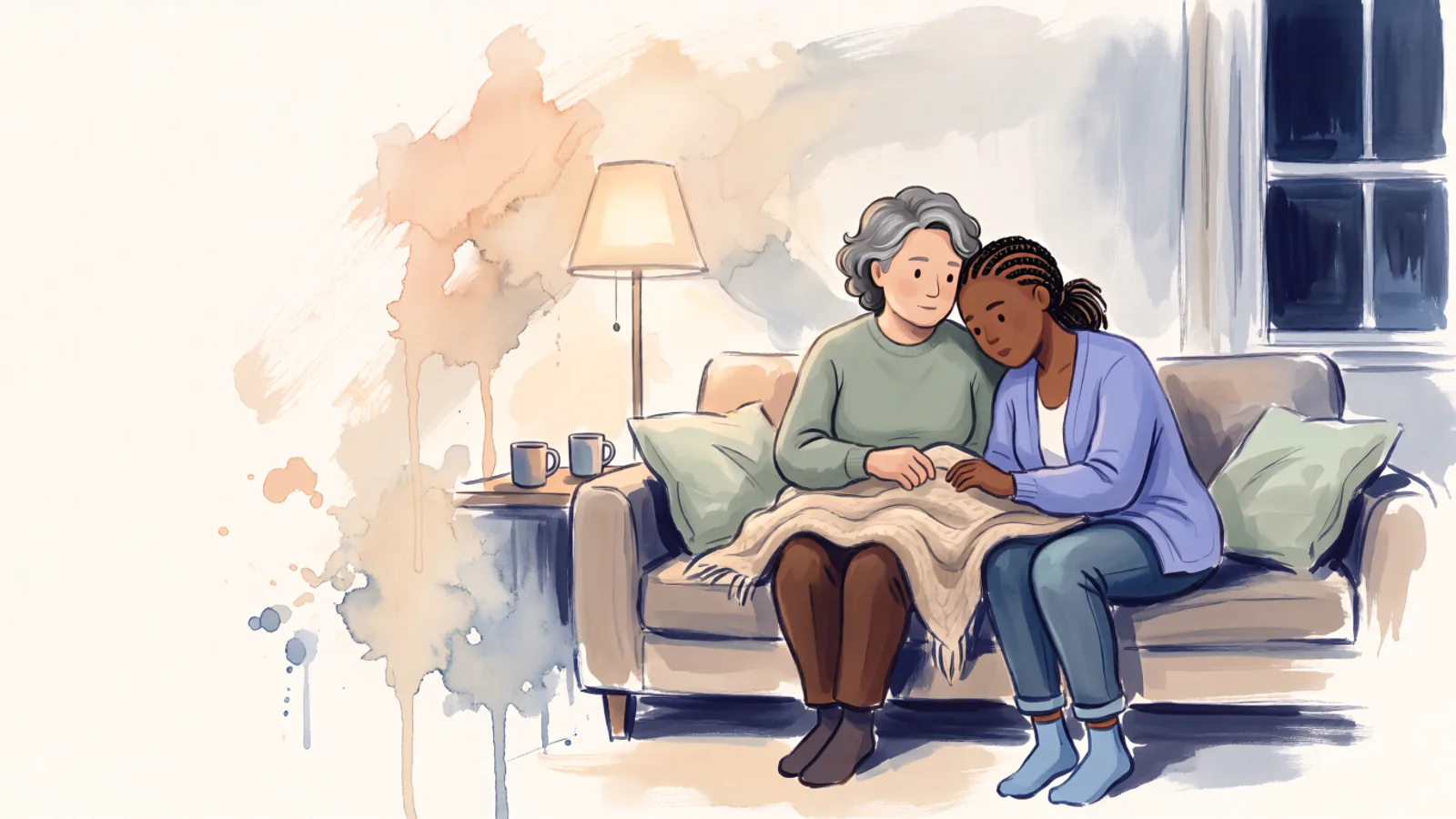
When this pairing works, the swings get smaller and shorter. They still pull back sometimes, but they tell you: "i'm being weird, it's not you, give me tonight." You still notice, but you don't brace. A good day is followed by an ordinary day instead of a disappearance. Research describes partners who "buffer" an insecure person, helping them feel better and behave more constructively, and the relationship improving as a result [6]. Studies of newlyweds found that, on average, people became more secure over time, with real individual differences [7]. That's the hopeful part. The honest part is that how the relationship actually feels day to day, like how committed and appreciated each of you feels, predicts quality far more than anyone's style does [8]. So watch the relationship you have, not the label.
Red flags it isn't working
- You've had the same "why did you go quiet?" conversation for months, and nothing about the quiet has changed.
- The pull-backs are getting longer, not shorter, and the returns come with no acknowledgement.
- You've stopped making plans because they get cancelled anyway.
- You've started checking their mood before deciding whether you're allowed to ask for anything.
- Friends say you seem tense or smaller, and you're not sure they're wrong.
If these sound familiar, that's information, not a verdict. Being steady was never the same as staying forever. Whether you keep going is your call.
Sources (8)
- Fraley, R. C. A Brief Overview of Adult Attachment Theory and Research. University of Illinois. https://labs.psychology.illinois.edu/~rcfraley/attachment.htm (accessed 2026-10-05)
- Bartholomew, K. (1990). Avoidance of intimacy: An attachment perspective. Journal of Social and Personal Relationships, 7(2), 147–178. https://doi.org/10.1177/0265407590072001 (abstract; accessed 2026-10-05)
- Bartholomew, K., & Horowitz, L. M. (1991). Attachment styles among young adults: A test of a four-category model. Journal of Personality and Social Psychology, 61(2), 226–244. https://doi.org/10.1037/0022-3514.61.2.226 (abstract; accessed 2026-10-05)
- Levine, A. Author website. https://www.amirlevinemd.com/ (home page; accessed 2026-10-05)
- Christensen, A., & Heavey, C. L. (1990). Gender and social structure in the demand/withdraw pattern of marital conflict. Journal of Personality and Social Psychology, 59(1), 73–81. https://doi.org/10.1037/0022-3514.59.1.73 (abstract; accessed 2026-10-05)
- Simpson, J. A., & Overall, N. C. (2014). Partner buffering of attachment insecurity. Current Directions in Psychological Science, 23(1), 54–59. https://doi.org/10.1177/0963721413510933 (abstract; accessed 2026-10-05)
- Davila, J., Karney, B. R., & Bradbury, T. N. (1999). Attachment change processes in the early years of marriage. Journal of Personality and Social Psychology, 76(5), 783–802. https://doi.org/10.1037/0022-3514.76.5.783 (abstract; accessed 2026-10-05)
- Joel, S., Eastwick, P. W., et al. (2020). Machine learning uncovers the most robust self-report predictors of relationship quality across 43 longitudinal couples studies. PNAS, 117(32), 19061–19071. https://doi.org/10.1073/pnas.1917036117 (abstract; accessed 2026-10-05)
Keep going
Fearful-Avoidant Push-Pull, for a Secure Partner: The Survival Guide
They end it, then they're back within weeks, sorry and sure. How to stay steady through the cycle without becoming the place it keeps…
Why: hand-picked as a companion
Secure With a Dismissive-Avoidant Partner: The Survival Guide
You notice the pull-back early and you don't panic. This guide is about what to do next, and how to tell patience from waiting.
Why: hand-picked as a companion
Anxious With a Fearful-Avoidant Partner: The Survival Guide
When your partner pulls you close and then pushes you away, your alarm goes off every time. How the loop works, and how to stop riding it.
Why: same topic: push-pull
More like this
- Guide Dismissive-Avoidant With a Fearful-Avoidant Partner: The Survival Guide
- Guide Fearful-Avoidant Push-Pull, for an Anxious Partner: The Survival Guide
- Guide Fearful-Avoidant Push-Pull, for a Dismissive Partner: The Survival Guide
- Guide Fearful-Avoidant Push-Pull, for a Fearful-Avoidant Partner: The Guide
- Guide Fearful-Avoidant With a Fearful-Avoidant Partner: The Survival Guide
- Term Hot and cold (push-pull)
- Guide Fearful-Avoidant With a Secure Partner: The Survival Guide
- Article The Push-Pull Cycle: Why Some Relationships Keep Ending and Restarting
- Guide Dismissive-Avoidant Push-Pull, for a Secure Partner: The Survival Guide