
Chapter 3 of 8
Fearful-Avoidant With a Secure Partner: The Survival Guide

It's Sunday night. They said they'd call at eight, and at eight your phone lights up. They ask about your day, laugh at the right part, say "talk tomorrow" and mean it. You hang up and feel, of all things, uneasy. Nothing is wrong. That's the problem. Some part of you is already looking for the catch, and another part is wondering if you should leave before there is one.
This guide is for the version of you that wants to stay. It explains why steady feels suspicious, where the loop shows up, and what to say when both pulls hit at once.
How you're each wired
Attachment isn't four boxes. Researchers describe two sliding scales: how much you worry about being left (anxiety) and how uncomfortable you are depending on people (avoidance) [1]. Where you each sit on those scales shapes this pairing more than any label.
You: Fearful-avoidant You sit high on both scales. Bartholomew described fearful avoidance as a real wish for closeness held back by fear of what closeness will cost [2]. In the four-category model, that comes from a shaky view of yourself and a guarded view of other people: you're not sure you deserve care, and you're not sure anyone will give it reliably [3]. So both strategies run at once. You reach, then you brace. Popular writing calls this oscillation, swinging between pulling people close and pushing them away [4]. It isn't indecision. It's two alarms wired to the same door.
Them: Secure Your partner sits low on both scales. They expect people to be mostly reliable and they don't panic when someone needs space. When you go quiet, their first guess is "busy", not "leaving". When you get close, they don't flinch. That isn't a lack of feeling. It's a nervous system that hasn't learned to treat closeness as a threat. They still have needs and limits; they just state them plainly.
What draws you together
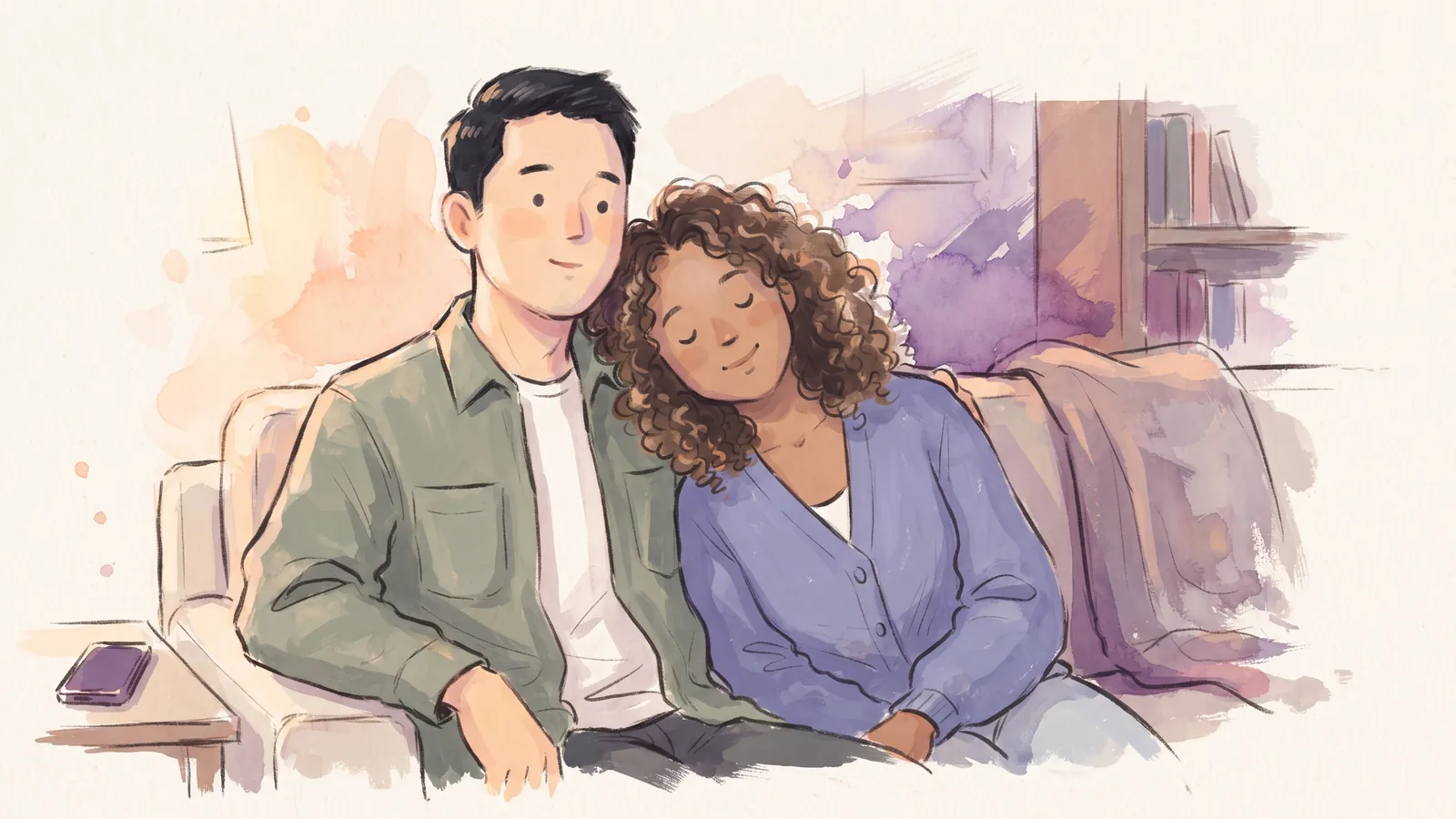
Their steadiness is the honest pull. After relationships that ran hot and cold, someone who texts back, keeps plans and says what they mean feels like rest. Research on partner buffering suggests some partners help insecure people feel better and act more constructively, and that this improves the relationship [5]. A secure partner is often that kind of partner.
There's another pull, though, and it's worth naming. Part of you may have chosen them because they seemed safe enough to let in, and part of you is waiting to find out you were wrong. Calm can feel unfamiliar, even boring, and unfamiliar can read as danger.
Where it goes wrong
The texts
Tuesday, 12:40: they send "thinking about you, hope the meeting went ok." It's kind. You read it four times. At 3:15 you finally reply "it was fine" and nothing else, because a warm reply would feel like handing over something they could use later. They answer "glad it's done, want to get dinner thurs?" You leave it on read until the next morning. Inside, you're worried they'll notice the distance and leave. Outside, you're creating the distance. They don't notice the drama; they just notice you're harder to reach than you were last week.
The arguments
They forget to tell you they'll be late. It's a small thing. You feel a spike of "this is where it starts" and say, "it's fine, I'm used to people not thinking about me." They apologise and ask what you need. That's when you shut down: "nothing, forget it." They try again. You go quieter. This looks like the demand and withdraw loop that shows up in many couples, where one presses and the other retreats [6], except you play both parts. You open the conflict with a protest, then withdraw when they move toward you. They're left answering a question you won't let them finish answering.
The distance
Three good weekends in a row. They mention meeting your friends, or a trip in spring. Something in you goes cold. You suddenly need a weekend alone, then another. You tell yourself you're just busy. They give you the space without fuss, which should feel good, and instead it makes you wonder if they care at all. So you come back hard: a long call, a burst of affection. Then the closeness tips over and you need space again. From their side, it feels like weather they can't read.
What each of you needs
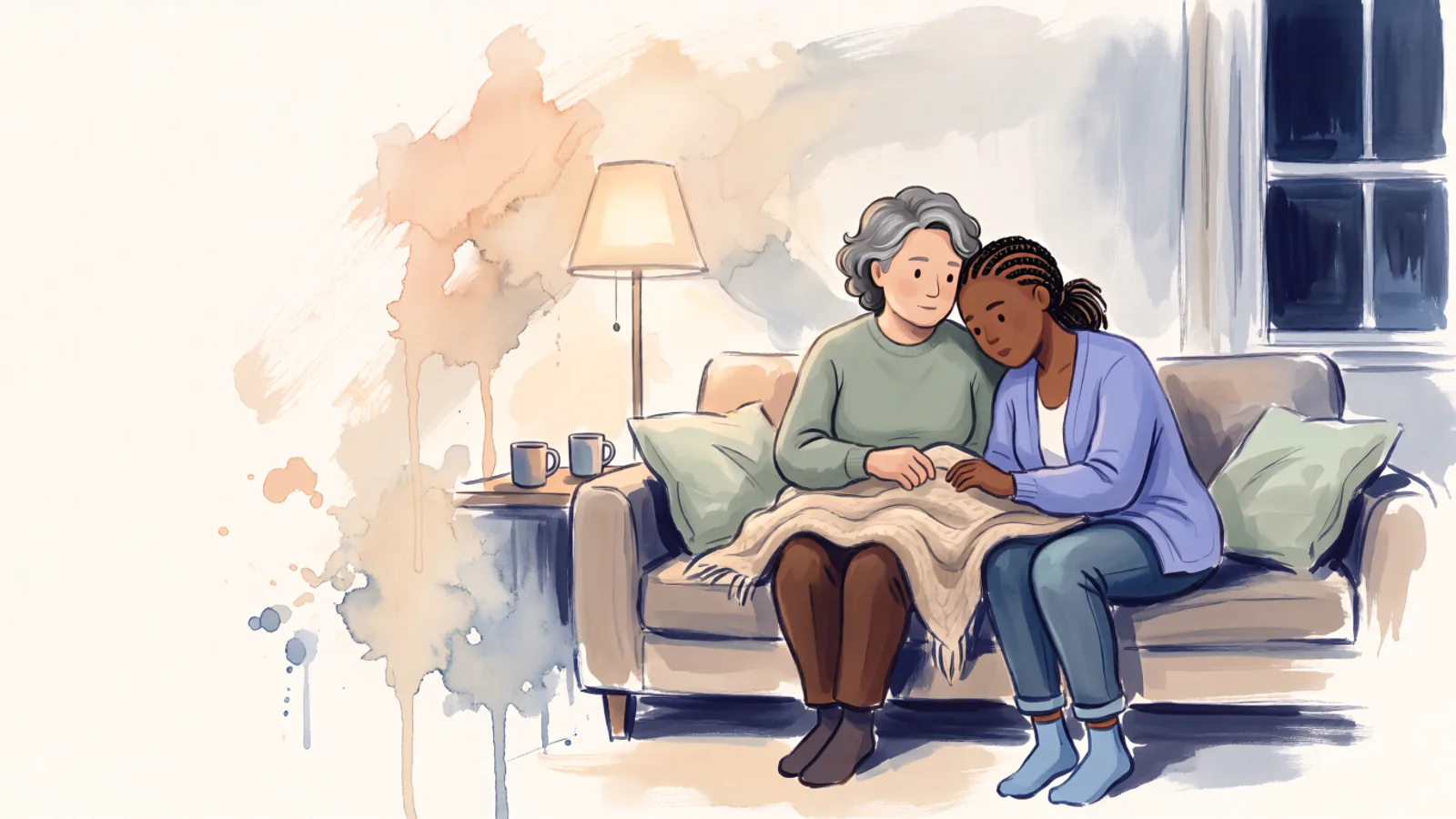
What you need You need time and evidence. Not promises, but a long run of ordinary moments where they show up and nothing bad happens. You need room to say "I'm scared" without it turning into a crisis. You need a partner who doesn't punish you for the pull-back and doesn't chase you through it either. And you need to keep trusting your own read on what's happening now, not what happened last time.
What they need They need to know what's going on. A secure partner can handle a lot, but they can't handle guessing. They need you to tell them when you're pulling back and why, even roughly. They need their consistency to count for something, rather than being tested again every week. And they need the relationship to be a place where they get cared for too, not only a place where they keep proving themselves.
Survival strategies
- Name both pulls before you act on one. When you feel the urge to go quiet or pick a fight, say what's happening instead. You don't need the full story. "Part of me wants to come closer and part of me wants to run" is enough. Saying it out loud takes the steam out of acting it out.
- Give the pull-back a time limit. Space is fine. Disappearing isn't. When you need a night or a weekend, say so and say when you'll be back. A secure partner can give you room easily when they know it has an edge.
hey, i need tonight to myself. not about you, just my head being loud. can we talk tomorrow after work?
- Stop running tests they didn't sign up for. Leaving texts on read to see if they'll chase, making a small slight into a big one to see if they'll stay: these are tests. They might pass every time and you'll still feel the urge to set the next one. Notice the test, and ask the question directly instead.
i got weird when you said spring trip. it's not a no. planning ahead makes me nervous. can we keep talking about it slowly?
- Repair fast, even when it's clumsy. After you shut down in an argument, come back within a day. "I went quiet. That was me, not you" is a full repair. A steady partner usually meets you there. Research on newlywed couples found people tended to become more secure over time, with the relationship and attachment shaping each other [7].
- Let boring be good. Keep a short note of the dull, reliable things they did this week: the call at eight, the dinner they kept, the "talk tomorrow" that happened. When your gut says "it's too calm, something's wrong," read the list.
- Keep your own say in it. Feeling safer with them doesn't mean you owe them staying forever. If you look honestly and it isn't right, that is your call to make. Just make it calmly, on a good day, rather than in the middle of a pull-back.
When it works
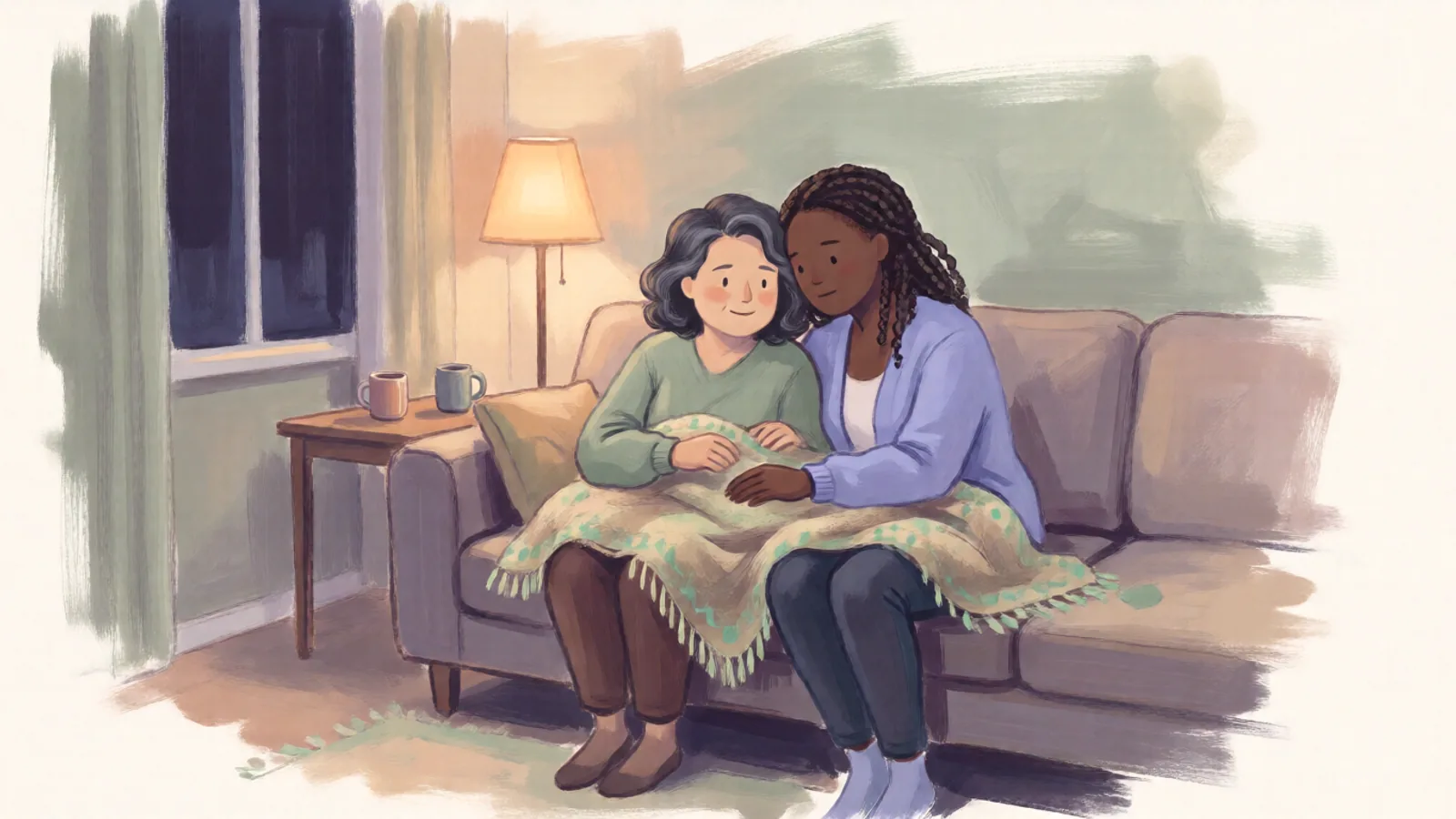
On a good version of this, you still feel the old pulls, but they stop running the show. You say "I'm getting jumpy, bear with me" and they say "ok, I'm here." You take a Saturday alone and come back on Sunday as planned. A small slight stays small. Over months, the tests get rarer because they keep coming back clean. How settled you are isn't fixed for life; attachment is fairly stable but not set in stone [8]. And how this relationship feels day to day, the trust, the appreciation, how conflict goes, matters more than either of your labels [9].
Red flags it isn't working
- You've had the same "you pulled away again" conversation for months, and nothing about the pattern has shifted on either side.
- They've stopped asking what's wrong, not out of security but out of tiredness.
- Your space has turned into whole weeks of silence, and you dread coming back more than you look forward to it.
- You feel safe with them but also invisible, because your needs never get said and they never get asked.
- You stay mostly because leaving feels too frightening, not because you want to be there. That's a real thing to look at, and the choice about what to do with it is yours.
Sources (9)
- Fraley, R. C. A Brief Overview of Adult Attachment Theory and Research. University of Illinois. https://labs.psychology.illinois.edu/~rcfraley/attachment.htm (accessed 2026-10-05)
- Bartholomew, K. (1990). Avoidance of intimacy: An attachment perspective. Journal of Social and Personal Relationships, 7(2), 147–178. https://doi.org/10.1177/0265407590072001 (abstract; accessed 2026-10-05)
- Bartholomew, K., & Horowitz, L. M. (1991). Attachment styles among young adults: A test of a four-category model. Journal of Personality and Social Psychology, 61(2), 226–244. https://doi.org/10.1037/0022-3514.61.2.226 (abstract; accessed 2026-10-05)
- Levine, A. Author website. https://www.amirlevinemd.com/ (home page; accessed 2026-10-05)
- Simpson, J. A., & Overall, N. C. (2014). Partner buffering of attachment insecurity. Current Directions in Psychological Science, 23(1), 54–59. https://doi.org/10.1177/0963721413510933 (abstract; accessed 2026-10-05)
- Christensen, A., & Heavey, C. L. (1990). Gender and social structure in the demand/withdraw pattern of marital conflict. Journal of Personality and Social Psychology, 59(1), 73–81. https://doi.org/10.1037/0022-3514.59.1.73 (abstract; accessed 2026-10-05)
- Davila, J., Karney, B. R., & Bradbury, T. N. (1999). Attachment change processes in the early years of marriage. Journal of Personality and Social Psychology, 76(5), 783–802. https://doi.org/10.1037/0022-3514.76.5.783 (abstract; accessed 2026-10-05)
- Fraley, R. C. (2002). Attachment stability from infancy to adulthood: Meta-analysis and dynamic modeling of developmental mechanisms. Personality and Social Psychology Review, 6(2), 123–151. https://doi.org/10.1207/S15327957PSPR0602_03 (abstract; accessed 2026-10-05)
- Joel, S., Eastwick, P. W., et al. (2020). Machine learning uncovers the most robust self-report predictors of relationship quality across 43 longitudinal couples studies. PNAS, 117(32), 19061–19071. https://doi.org/10.1073/pnas.1917036117 (abstract; accessed 2026-10-05)
Keep going
Anxious With a Secure Partner: The Survival Guide
Your alarm is used to chasing. Their steadiness gives it nothing to chase. How to stop testing a calm partner and let it work.
Why: hand-picked as a companion
Dismissive-Avoidant With a Secure Partner: The Survival Guide
A secure partner gives you room without panicking. Here's how to use that room to stay close instead of slowly drifting out of reach.
Why: same topic: what secure love looks like
Fearful-Avoidant With an Anxious Partner: The Survival Guide
Their closeness feels like home, then like a wall closing in. How to stop swinging and give an anxious partner something steady.
Why: hand-picked as a companion
More like this
- Guide Secure With a Fearful-Avoidant Partner: The Survival Guide
- Quiz What's your attachment style?
- Guide Fearful-Avoidant With a Dismissive-Avoidant Partner: The Survival Guide
- Guide Fearful-Avoidant With a Fearful-Avoidant Partner: The Survival Guide
- Guide Secure With a Secure Partner: The Survival Guide
- Quiz What's your texting-era attachment energy?
- Guide Fearful-Avoidant Push-Pull, for a Secure Partner: The Survival Guide
- Term Earned secure attachment
- Term Secure attachment