
Chapter 3 of 8
Secure With a Secure Partner: The Survival Guide
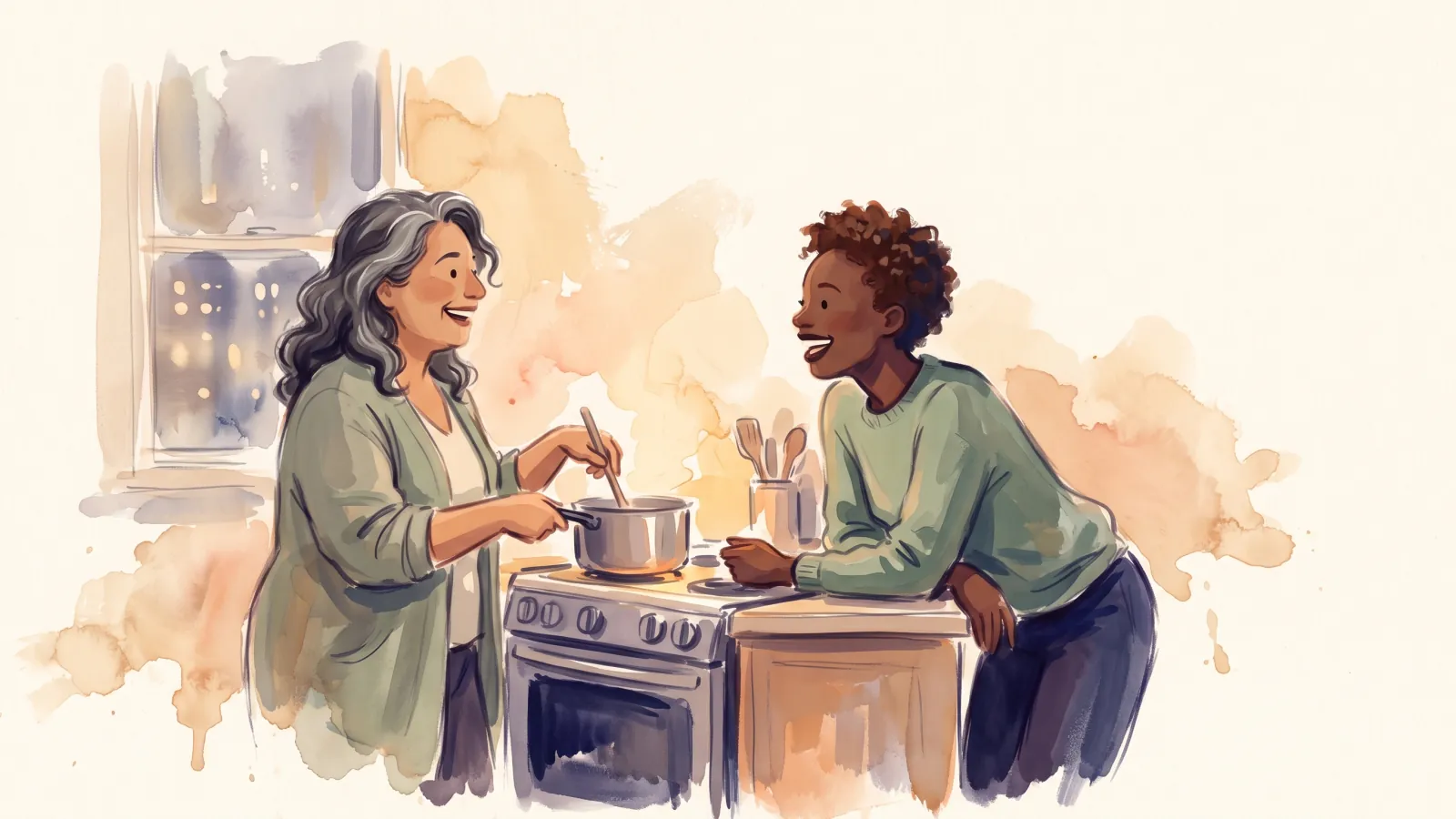
It's Friday, 6:40pm. Your partner texts: "going to sam's after work, back late. there's pasta in the fridge." You read it, reply "have fun, say hi," and start your own evening. No spiral. No rereading. Nothing to decode.
That is the good part. The quieter risk is that months of easy evenings turn into two people who are pleasant to each other and no longer really talking. This guide covers what a secure pairing does well, the slow ways it slips, and the small habits that keep calm from turning into coasting.
How you're each wired
Attachment styles aren't boxes. Researchers describe them as two sliding scales: attachment anxiety (how much you worry about being left) and attachment avoidance (how uncomfortable closeness makes you) [1]. "Secure" means you both sit low on both scales, most of the time. It doesn't mean zero.
You: Secure In Bartholomew and Horowitz's model, secure is a positive view of yourself plus a positive view of other people [2]. In practice: you say what you need and expect it to be taken seriously. A late reply is a late reply. You can lean on a partner without feeling trapped, and you can be leaned on without feeling drained. Conflict is uncomfortable, but you don't read it as the end. Stress can still push you up either scale for a while: a bad month at work, a family crisis, a breakup that came before this one.
Them: Secure Your partner runs on a similar setup, with their own history and their own pressure points. They may be the one who goes quiet under stress while you get chatty, or the reverse. Two secure people aren't identical people. You're two people who, on a normal day, both assume the other is on their side. That assumption is the asset. It's also the thing you can start taking for granted.
What draws you together
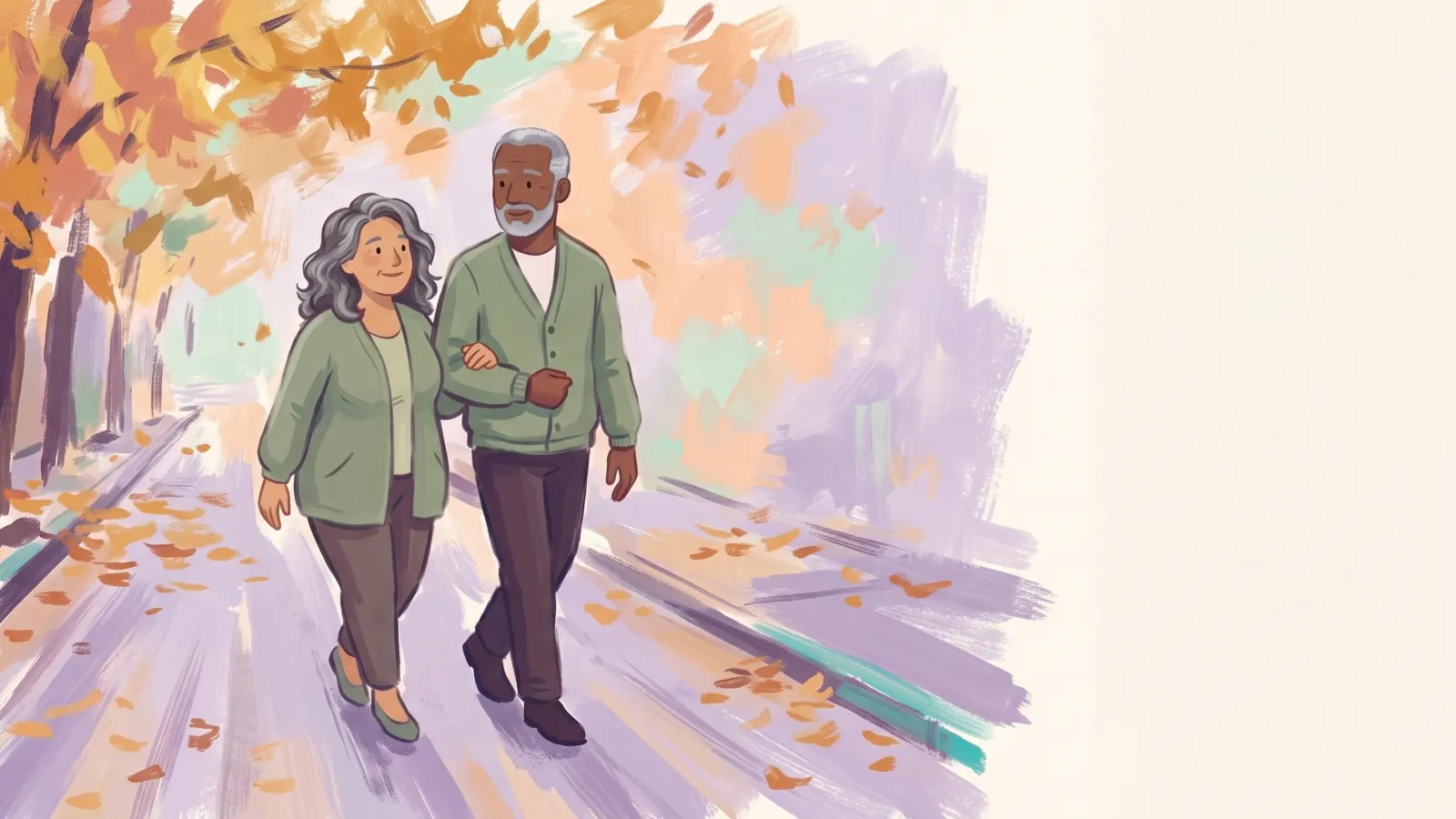
It feels easy, and easy is underrated. Plans get made and kept. Nobody's keeping score of who texted first. You can tell each other about a hard day without it becoming a referendum on the relationship.
There's some research behind the pull. In a study of 322 newlywed couples, partners tended to pair up by similarity in attachment security, and couples where both were secure showed better overall marital adjustment than couples where one or both were insecure [3]. That's one study and one moment in time, but it fits what most secure people describe: the relationship feels like a place to rest, not a place to perform.
If you've been through an anxious or avoidant relationship before, this can feel strange at first. Calm can read as "no spark." It isn't. It's the absence of a threat you'd gotten used to.
Where it goes wrong
Secure pairings rarely blow up. They wear down. Each of the loops below starts with something reasonable.
The texts
Tuesday, 12:15pm. You send: "rough meeting, my manager basically took credit for the whole launch." At 3:50pm they reply: "ugh sorry. dinner at 7?" It's fine. They're busy. You're secure, so you don't spiral. But you also don't say, "I actually wanted to talk about it." Neither does the next text. Six months on, your texts are all logistics: groceries, pickups, who's walking the dog. Nobody did anything wrong. You both just stopped bringing the real stuff, because the relationship didn't seem to need it.
The arguments
The fight isn't loud. It's polite. "Do you want to go to your parents' for the holidays again?" "I mean, if you want to." "I don't mind." "Me neither." You both decide it's fine, and it isn't, quite. Researchers who study couple conflict describe a demand/withdraw pattern where one partner pushes for change and the other retreats, and they found the role shifts with the topic: people tend to push on changes they want and pull back on changes their partner wants [4]. Two secure people still do this. The difference is that you both back off so gracefully that the issue never gets argued, so it never gets settled.
The distance

Saturday morning. They go to the climbing gym. You go to the market. Saturday evening, you're both on the sofa on separate screens. Sunday, separate errands. Space is healthy, and you both handle it well, which is exactly why it can grow without anyone noticing. No one is pulling away. No one is chasing. You're just two capable adults running two good lives next to each other, and the shared one gets smaller.
What each of you needs
What you need You need the relationship to still be a place where you're known, not just accommodated. That means being asked about the real stuff, being able to raise a small annoyance without it becoming a big deal, and having some time that is actually shared, not just time spent in the same flat. You also need permission to have a bad stretch. Being "the secure one" in your friend group, or with each other, can quietly turn into never being allowed to wobble.
What they need Probably the same things, though they may weigh them differently. They need you to notice when they've gone a bit flat instead of assuming they're fine because they usually are. They need room to disagree without you smoothing it over too fast. And they need to hear, now and then, that you still choose this on purpose, not because it's comfortable and leaving would be a hassle.
Survival strategies
None of this is about fixing a broken relationship. It's maintenance, the dull stuff that keeps a good thing good.
- Name small things inside 24 hours. Your advantage is that small complaints don't feel dangerous to either of you. Use it. Raise the thing the same day or the next, in one sentence, before it becomes a pattern. Small and early beats big and overdue.
- Have one non-logistics conversation a week. Not a formal "check-in" with an agenda. A walk, a long dinner, a drive where you ask something real: what's stressing them, what they're looking forward to, what they'd change. Ten honest minutes is enough.
- Settle the polite non-decisions. When you catch yourselves in "I don't mind / me neither," stop and each say a preference out loud, even a weak one. Then decide. A secure couple can survive a real disagreement. It's the fake agreements that pile up.
- Guard some shared time on purpose. Keep your separate lives; they're part of why this works. But pick one thing that's only yours together, a standing breakfast or a weekly film, and protect it the way you'd protect any other plan.
- Say when you're running low. Security can slip under stress. If you've been snappy or withdrawn for a week, say so before they have to guess. It costs you one sentence.
A text you could send tonight:
hey, not urgent, but can we talk properly this weekend? feels like we've been all logistics lately and i miss the actual you
What to say when the polite fight starts:
ok i'm going to stop saying "i don't mind." i'd honestly rather do christmas here this year. what's your real answer?
And when you're the one who's off:
i've been a bit flat this week. it's work, not you. just didn't want you guessing
When it works
A good secure pairing looks almost boring from the outside, and that's the point. Research on newlyweds found people became more secure on average over the early years of marriage, and that attachment and the relationship kept shaping each other [5]. Two secure people tend to keep reinforcing that.
Day to day it looks like this: you tell each other the annoying thing and it's over in five minutes. You have separate weekends and come back with stories. A hard week at work gets talked about, not just endured. Arguments end with "ok, so what do we do?" rather than silence. You still make new plans, a trip, a project, a change, so the shared life keeps growing alongside the two separate ones.
It's also worth keeping your labels in proportion. A large study across 43 couples datasets found that attachment scores did predict relationship quality, but people's own sense of the relationship (feeling appreciated, trusting their partner's commitment, how conflict goes) predicted far more [6]. Being secure is a head start. What you do with it is the rest.
Red flags it isn't working
- You realise you haven't had a conversation that wasn't about logistics in a month, and neither of you seems to mind.
- The same small issue (chores, plans, family) has been "fine" for a year, and you both quietly resent it.
- One of you has been flat or withdrawn for weeks, and the other hasn't asked because "they're usually fine."
- Your separate lives are full and the shared one has shrunk to a sofa and a streaming queue.
- You've stopped choosing the relationship and started defaulting to it. Whether to choose it again, out loud, or to admit you've grown apart is your decision to make, together or alone.
Sources (6)
- Fraley, R. C. A Brief Overview of Adult Attachment Theory and Research. University of Illinois. https://labs.psychology.illinois.edu/~rcfraley/attachment.htm (accessed 2026-10-05)
- Bartholomew, K., & Horowitz, L. M. (1991). Attachment styles among young adults: A test of a four-category model. Journal of Personality and Social Psychology, 61(2), 226–244. https://doi.org/10.1037/0022-3514.61.2.226 (abstract; accessed 2026-10-05)
- Senchak, M., & Leonard, K. E. (1992). Attachment styles and marital adjustment among newlywed couples. Journal of Social and Personal Relationships, 9(1), 51–64. https://doi.org/10.1177/0265407592091003 (abstract; accessed 2026-10-05)
- Christensen, A., & Heavey, C. L. (1990). Gender and social structure in the demand/withdraw pattern of marital conflict. Journal of Personality and Social Psychology, 59(1), 73–81. https://doi.org/10.1037/0022-3514.59.1.73 (abstract; accessed 2026-10-05)
- Davila, J., Karney, B. R., & Bradbury, T. N. (1999). Attachment change processes in the early years of marriage. Journal of Personality and Social Psychology, 76(5), 783–802. https://doi.org/10.1037/0022-3514.76.5.783 (abstract; accessed 2026-10-05)
- Joel, S., Eastwick, P. W., et al. (2020). Machine learning uncovers the most robust self-report predictors of relationship quality across 43 longitudinal couples studies. PNAS, 117(32), 19061–19071. https://doi.org/10.1073/pnas.1917036117 (abstract and significance statement; accessed 2026-10-05)
Keep going
Anxious With a Secure Partner: The Survival Guide
Your alarm is used to chasing. Their steadiness gives it nothing to chase. How to stop testing a calm partner and let it work.
Why: hand-picked as a companion
Secure With an Anxious Partner: The Survival Guide
You can be the steady one without becoming the only calm in the room. How to love an anxious partner and keep your own limits.
Why: hand-picked as a companion
What's your attachment style?
36 statements about how you tend to feel and act in close romantic relationships. Takes about 8 minutes. You get two scores, anxiety and…
Why: hand-picked as a companion
More like this
- Quiz What's your texting-era attachment energy?
- Guide Dismissive-Avoidant With a Secure Partner: The Survival Guide
- Guide Fearful-Avoidant With a Secure Partner: The Survival Guide
- Guide Secure With a Dismissive-Avoidant Partner: The Survival Guide
- Guide Secure With a Fearful-Avoidant Partner: The Survival Guide
- Term Secure attachment
- Guide Anxious With an Anxious Partner: The Survival Guide
- Guide Dismissive-Avoidant With an Anxious Partner: The Survival Guide
- Guide Dismissive-Avoidant With a Dismissive-Avoidant Partner: The Survival Guide