
Chapter 4 of 8
Anxious With an Anxious Partner: The Survival Guide
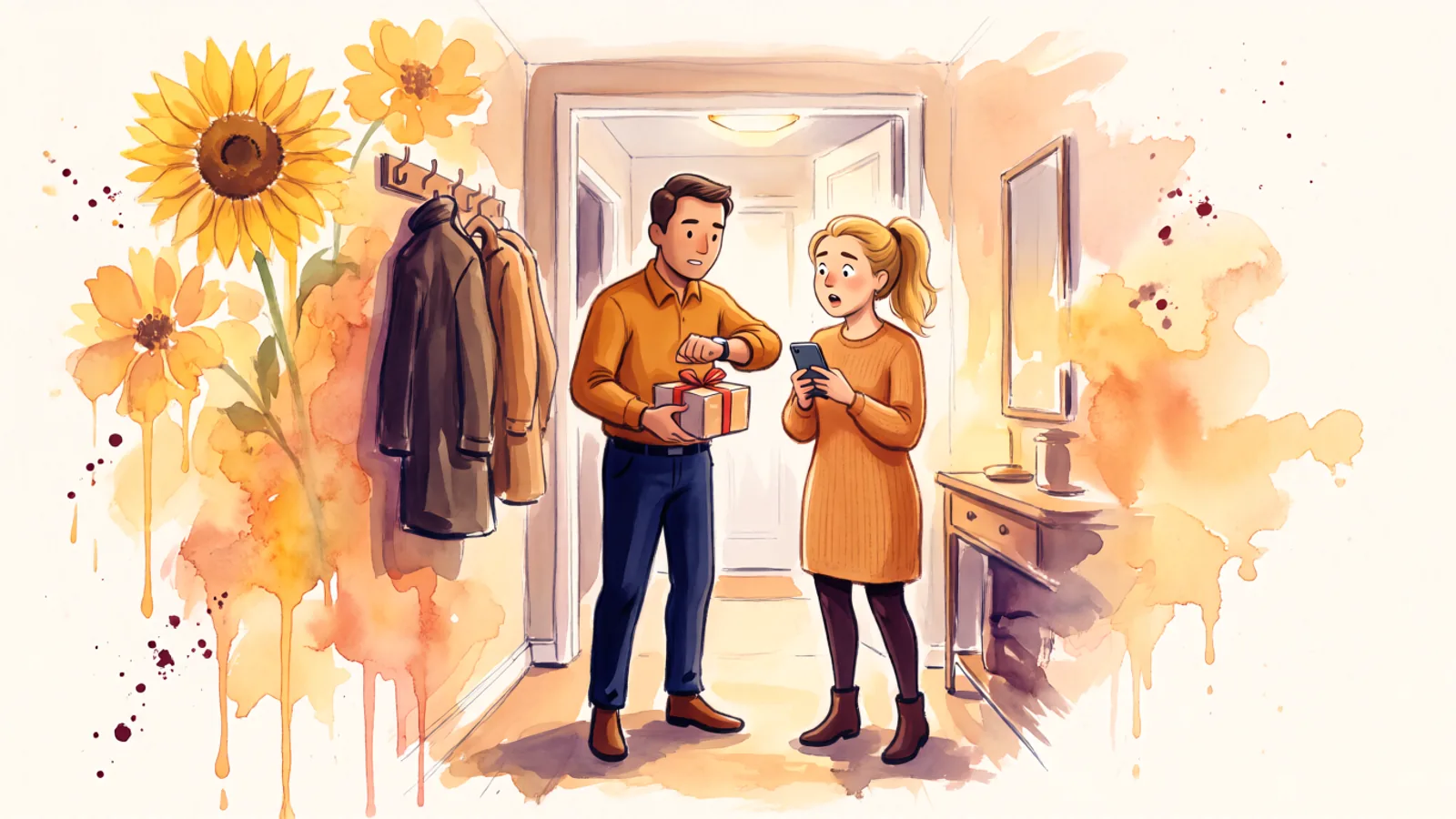
It's 10:52. You said goodnight at 10:30 and they replied "night" with no heart. You're reading it again. Across town, they're reading your "goodnight x" and wondering why it was shorter than yesterday's. Two phones, two alarms, both waiting for the other one to make it stop.
This is what it looks like when two people who both reach end up together. The closeness is real. So is the loop. This guide shows you how the loop runs, and how to keep one without the other.
How you're each wired
Researchers now describe attachment as two sliding scales, anxiety and avoidance, rather than four boxes [1]. You and your partner both sit high on the anxiety scale and low on avoidance. The labels are shorthand for that, not a sentence.
You: Anxious (preoccupied) In the four-style model, the preoccupied pattern pairs a shaky view of yourself with a hopeful view of other people [2]. You want closeness and you go toward it. When the connection feels uncertain, your system turns the volume up: more checking, more reaching, more replaying. Researchers call this a hyperactivating strategy [3]. It's a way of making sure you don't get left, not a flaw in you.
Them: Anxious (preoccupied) Your partner runs the same strategy. That means they're not cold when they go quiet. More often they're hurt, waiting, or trying not to look "too much". They read your silences the way you read theirs. Under pressure they may reach harder, or they may pull back on purpose to see whether you'll follow. Both moves come from the same place: wanting to know you're still there.
What draws you together
Romantic love works a lot like the bond between a child and a caregiver: you want the person near, you look to them when you're scared, and losing them feels like a threat [4]. Two people who both lean anxious often say this out loud early on, and it feels like relief. Nobody is playing it cool. Texts come back fast. "I miss you" gets said first by both of you.
Be honest about what the research shows, though. In one well-known study of dating couples, no anxious-anxious pairs turned up at all [5]. That doesn't mean these pairings don't exist. It means they seem less common in research samples, and the popular vocabulary you already know, much of it from Attached [10], is built around the anxious-avoidant trap instead. You're working with less of a map. This guide is one.
Where it goes wrong
The texts
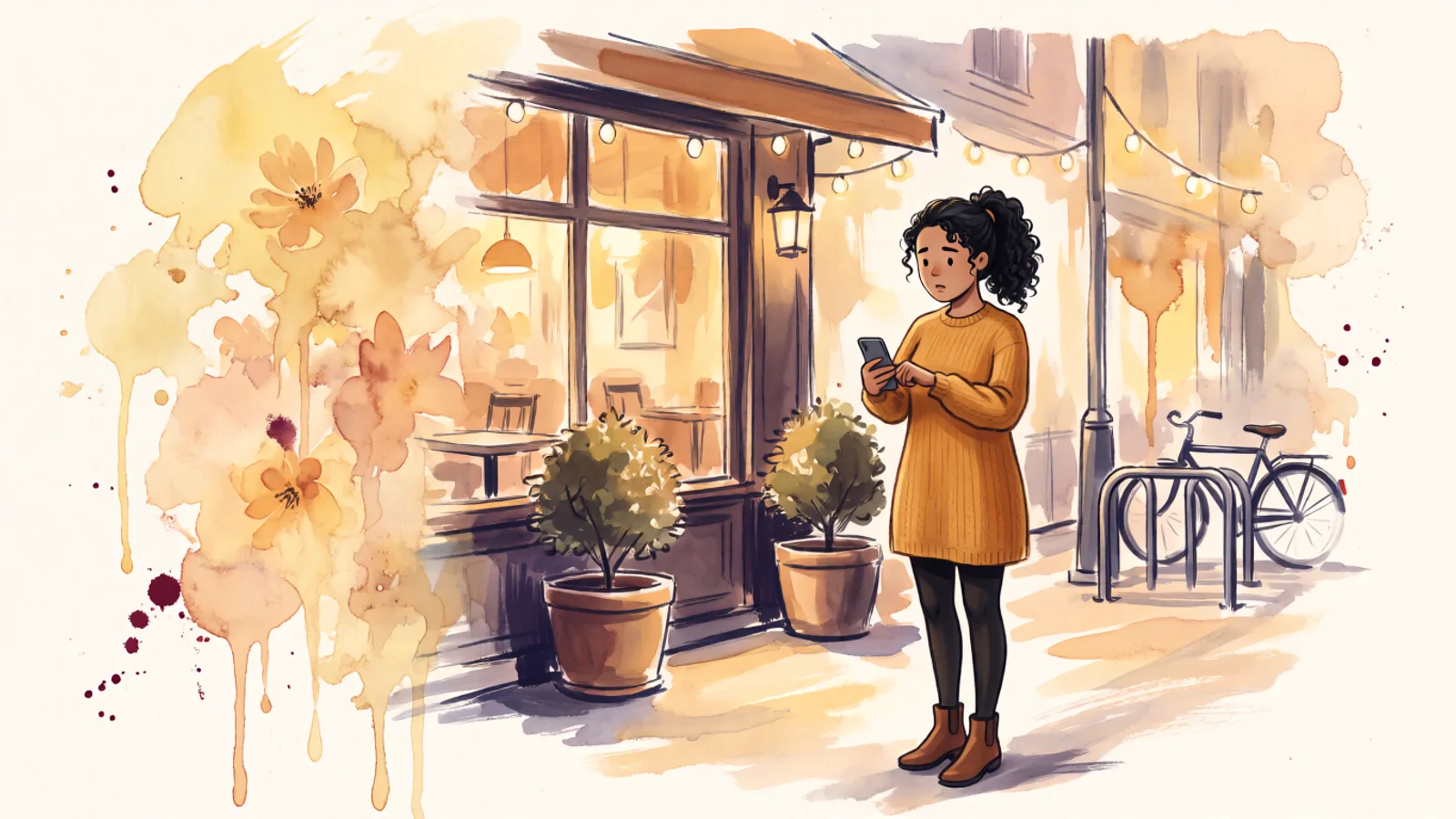
Saturday, 2:14 pm: "you ok? you seem off". 2:41 pm: "i'm fine, just busy". You read "just busy" as distance. They wrote it because your question made them think you were upset with them. 3:05 pm: "ok. let me know when you're free". Now they read "ok." as cold. By 4 pm you're both holding your phones, both drafting longer messages, both waiting for the other to go first. Nobody did anything wrong. Two systems on high alert read each other's caution as a threat.
The arguments
The well-documented couple loop is demand and withdraw: one partner pushes with requests and complaints while the other retreats [6]. You'd expect two anxious partners to both push. Often they do. But the same research found that who pushes depends partly on whose concern is on the table [6]. So you trade roles. When it's your worry, you chase. When it's theirs, you go quiet because you feel blamed. Then they chase.
It sounds like: "You never check in when you're out." "I texted you twice!" "After I asked." "So nothing I do counts?" Each of you is defending your hurt while asking the other to drop theirs first. Research also suggests people who lean anxious tend to see their partner and relationship less positively right after a hard conversation [7], so even a fight that ends okay can leave both of you feeling worse.
The distance
A weekend apart is the stress test. They go to a friend's wedding. You both agree it's fine. Friday night you send a photo of dinner; they reply an hour later from a loud room. Saturday you post something and they don't like it. Sunday they come home tired and you're quiet, because you missed them and you're also a little angry about it. They take your quiet as punishment. Neither of you can say "I need you to come toward me" because both of you are waiting to be the one who's reached for.
What each of you needs
What you need You need the reassurance to come without having to earn it by getting upset first. A check-in that's offered, not extracted. Plain words about plans: when they'll be back, when they'll text. And a way to be upset that doesn't turn into a vote on whether the relationship is over.
What they need Exactly the same, which is the trap and the opening. They need to hear that your quiet isn't a verdict. They need you to say what you want instead of hinting. And on the nights you're both scared, they need one of you to go first, without keeping score of who went first last time.
Survival strategies

Neither of you can be the calm one all the time. You can each be the calm one some of the time, on purpose.
- Name the double alarm. When you both start spiralling, say so. Agree on a phrase now, while things are good, that means "we're both scared, nobody's leaving". Using it once beats ten paragraphs of explaining.
- Take turns being the anchor. Decide that whoever notices the spiral first goes first with reassurance, even if they're also upset. It feels unfair in the moment. Over months it evens out, and it stops the standoff.
- Set the texting rhythm out loud. Agree on the basics: a message when you land, a goodnight when you're apart, a heads-up if you'll be off your phone. Rules sound unromantic. They also remove a hundred small reasons to panic.
- Ask, don't test. Going quiet to see if they'll notice, or posting something to see if they'll react, almost always works against you. Two people reading each other's tests is how a Saturday disappears.
- Soothe yourself for the first ten minutes. Before you reply to a message that stung, wait, breathe, reread it as if a friend sent it. Then answer. Your partner doesn't need you to have no feelings. They need you to answer the message they actually sent.
- Plan the weekends apart. Before a trip, agree on one call and a couple of photos. Knowing the next contact point does more than any amount of reassurance after the fact.
For the 2 pm text spiral:
hey, i think we're both reading into things. i'm not upset with you. just missing you. call later?
For the middle of the argument loop:
I'm scared and I think you are too. Can we stop trying to win this and both say what we actually need?
For the Sunday you get home:
i was quiet because i missed you, not because i'm mad. can we just sit together for a bit?
When it works
When this pairing works, it's warm in a way a lot of people never get. You both say the thing. Neither of you makes the other guess whether they're wanted. You learn each other's tells and start catching the spiral early: "you're doing the thing", said with a laugh. You trade the anchor role without keeping a tally.
There's good evidence that people can move toward security over time inside a steady relationship. In one study, newlyweds on average became more secure across the early years of marriage, with real differences between people [8]. Two anxious partners can do that for each other. And across dozens of couples studies, how the relationship actually feels day to day, such as feeling your partner is committed and appreciates you, predicted relationship quality far better than either partner's style [9]. Your labels don't decide this. How you treat each other does.
Red flags it isn't working
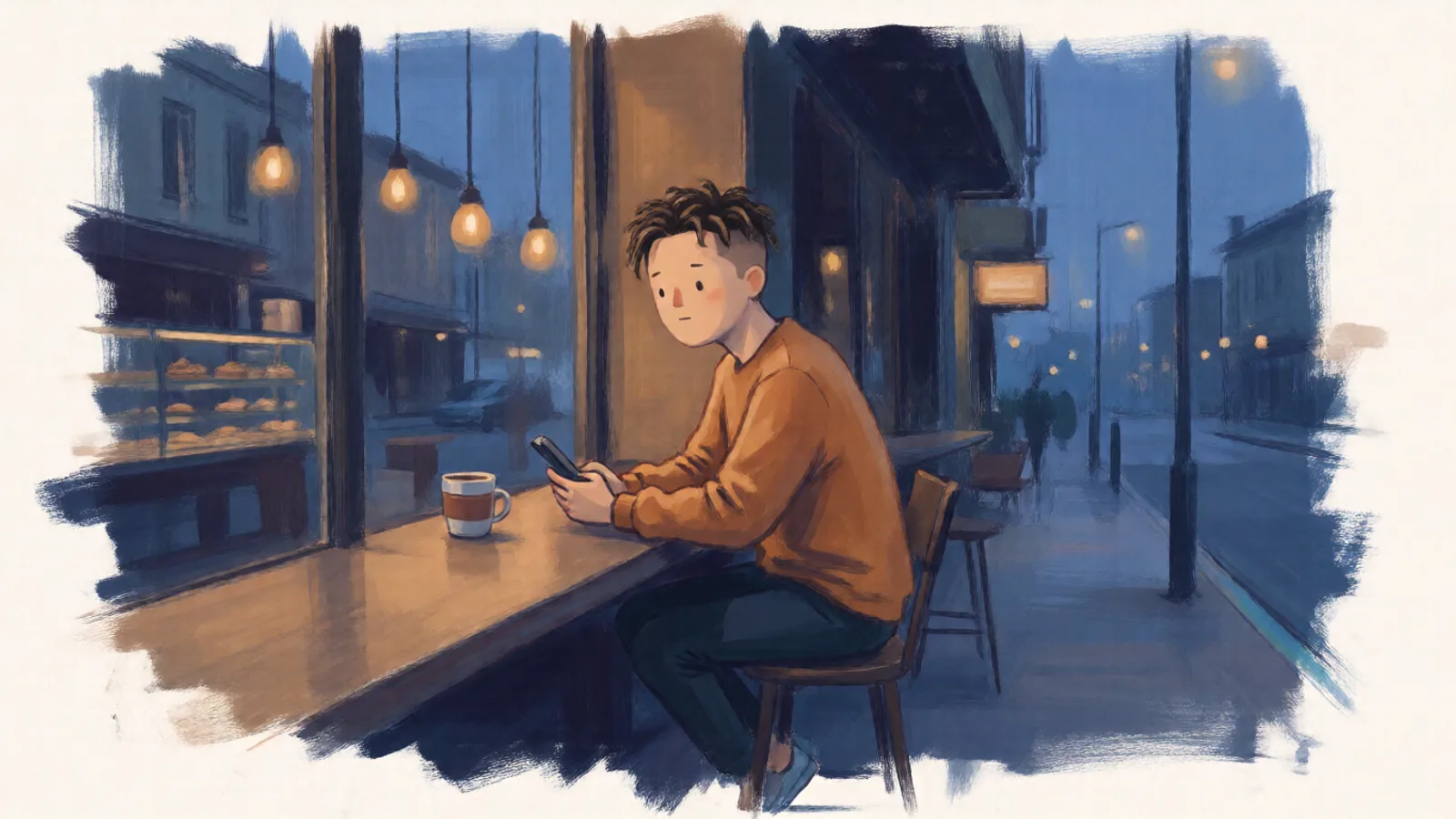
- You've had the same "you didn't check in" argument for six months, and the agreements you made never hold.
- Every weekend apart ends in a fight or a cold Sunday, even when nothing actually happened.
- You both test each other more than you ask, and you've stopped believing the reassurance when it comes.
- Your whole week is shaped around managing their mood and yours, and there's no room left for anything else in your life.
- One of you is always the anchor and the other never takes a turn.
None of these make anyone a bad person. They tell you the pattern is stronger than the plan right now. You can keep working on it together, or you can decide you're done. Both are choices you're allowed to make, and leaving with clarity is not failing.
Sources (10)
- Fraley, R. C. A Brief Overview of Adult Attachment Theory and Research. University of Illinois. https://labs.psychology.illinois.edu/~rcfraley/attachment.htm (accessed 2026-10-05)
- Bartholomew, K., & Horowitz, L. M. (1991). Attachment styles among young adults: A test of a four-category model. Journal of Personality and Social Psychology, 61(2), 226–244. https://doi.org/10.1037/0022-3514.61.2.226 (abstract; accessed 2026-10-05)
- Mikulincer, M., & Shaver, P. R. (2003). The attachment behavioral system in adulthood: Activation, psychodynamics, and interpersonal processes. Advances in Experimental Social Psychology, 35, 53–152. https://doi.org/10.1016/S0065-2601(03)01002-5 (metadata only; accessed 2026-10-05)
- Hazan, C., & Shaver, P. (1987). Romantic love conceptualized as an attachment process. Journal of Personality and Social Psychology, 52(3), 511–524. https://doi.org/10.1037/0022-3514.52.3.511 (abstract; accessed 2026-10-05)
- Kirkpatrick, L. A., & Davis, K. E. (1994). Attachment style, gender, and relationship stability: A longitudinal analysis. Journal of Personality and Social Psychology, 66(3), 502–512. https://doi.org/10.1037/0022-3514.66.3.502 (abstract; accessed 2026-10-05)
- Christensen, A., & Heavey, C. L. (1990). Gender and social structure in the demand/withdraw pattern of marital conflict. Journal of Personality and Social Psychology, 59(1), 73–81. https://doi.org/10.1037/0022-3514.59.1.73 (abstract; accessed 2026-10-05)
- Simpson, J. A., Rholes, W. S., & Phillips, D. (1996). Conflict in close relationships: An attachment perspective. Journal of Personality and Social Psychology, 71(5), 899–914. https://doi.org/10.1037/0022-3514.71.5.899 (abstract; accessed 2026-10-05)
- Davila, J., Karney, B. R., & Bradbury, T. N. (1999). Attachment change processes in the early years of marriage. Journal of Personality and Social Psychology, 76(5), 783–802. https://doi.org/10.1037/0022-3514.76.5.783 (abstract; accessed 2026-10-05)
- Joel, S., Eastwick, P. W., et al. (2020). Machine learning uncovers the most robust self-report predictors of relationship quality across 43 longitudinal couples studies. PNAS, 117(32), 19061–19071. https://doi.org/10.1073/pnas.1917036117 (abstract; accessed 2026-10-05)
- Levine, A., & Heller, R. S. F. (2010). Attached: The New Science of Adult Attachment and How It Can Help You Find—and Keep—Love. TarcherPerigee. https://openlibrary.org/works/OL16929630W (bibliographic record only; accessed 2026-10-05)
Keep going
Anxious With a Dismissive-Avoidant Partner: The Survival Guide
The more you reach, the more they pull back. Why the anxious-avoidant loop runs, what each of you needs, and how to step out of the chase.
Why: hand-picked as a companion
Anxious With a Fearful-Avoidant Partner: The Survival Guide
When your partner pulls you close and then pushes you away, your alarm goes off every time. How the loop works, and how to stop riding it.
Why: hand-picked as a companion
Secure With an Anxious Partner: The Survival Guide
You can be the steady one without becoming the only calm in the room. How to love an anxious partner and keep your own limits.
Why: same topic: protest behaviour
More like this
- Guide Anxious With a Secure Partner: The Survival Guide
- Quiz What's your attachment style?
- Quiz What's your texting-era attachment energy?
- Term Anxious attachment
- Article Protest behaviour: what it is and why you did it
- Guide Dismissive-Avoidant With an Anxious Partner: The Survival Guide
- Guide Fearful-Avoidant With an Anxious Partner: The Survival Guide
- Term Protest behaviour
- Guide Dismissive-Avoidant Push-Pull, for an Anxious Partner: The Survival Guide