
Chapter 7 of 8 · Back to push-pull
Fearful-Avoidant Push-Pull, for an Anxious Partner: The Survival Guide
It's 1:47 a.m., nineteen days after "i can't do this, i'm sorry, you deserve better." Your phone lights up: "i miss you so much it hurts." Your chest unclenches before you've decided anything. You know this part. The relief. The three-hour call. The promise that this time they've figured it out. You also know what came after it last time, and the time before that.
This guide is about that cycle: why it runs this fast, why it catches you every time, and how to step off it without hating yourself or them.
What the cycle looks like
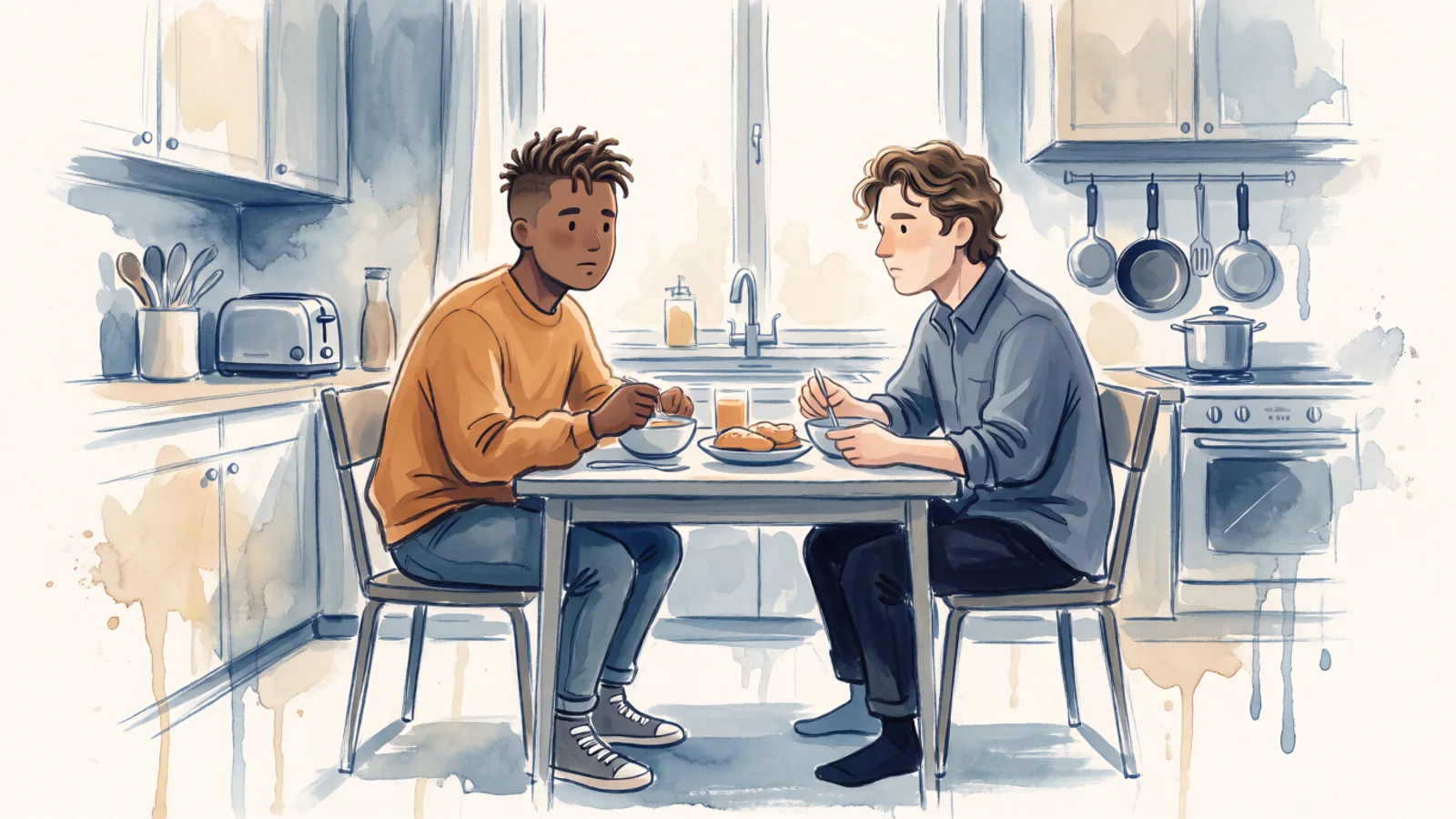
The pull
Tuesday, 9:12 p.m.: "can i call you? i've been thinking about everything." The call runs until 1 a.m. They say the breakup was panic, that losing you showed them what they actually want, that they're ready now. By Thursday they're texting "good morning" at 7:40 and asking about a trip in March. By the weekend they've seen your friends again. It feels like the relationship you were promised the first time. It also feels like being rescued, and that's the part worth noticing.
The push
Three weekends later you spend Sunday at their place, and it's the closest you've felt. Monday the replies shrink: "busy today." Tuesday, 6:15 p.m., you ask if everything's ok. At 10:52 p.m.: "i think i need some space. i don't know what's wrong with me." On Wednesday's call they cry, and then they say it: "i can't give you what you need." They sound as wrecked as you feel. That's what makes this push so confusing. It isn't cold. You're both upset, and it still ends.
The timeline
Real cycles vary in length and in who reaches out first. This is one common shape at this pattern's pace.
- Week 1: They reach out after the last breakup. Long calls, apologies, big plans. You say yes within days.
- Weeks 2-4: The pull at full strength. Daily texts, nights together, talk about the future.
- Week 5: The best weekend yet, then the shorter replies, a cancelled dinner, "i'm just tired."
- Week 6: The breakup, by tearful call or a long late-night text. They say you deserve better.
- Weeks 7-8: Mostly silence, with a "hope you're ok" or a 2 a.m. song link. You reread old messages.
- Week 9: They come back. "i miss you so much it hurts." The cycle starts again at Week 1.
Why your partner does this
Bartholomew described fearful avoidance as "a conscious desire for social contact which is inhibited by fears of its consequences" [1]. Both halves are real. Your partner wants closeness, and closeness also feels like exposure: the more it matters, the more there is to lose. People in this pattern tend to doubt they deserve love and support [1], so a great weekend can feel less like safety and more like the moment before being left.
So the push tends to land right after the peak, and the return tends to come once distance makes losing you feel real. When the fear of losing you outweighs the fear of being close, they reach out. This is a strategy for handling two fears at once, not a verdict on how much they care. It's also why this cycle is faster and hotter than the dismissive-avoidant version, which looks more like a slow cool-down and a casual return months later.
You'll see this pattern called "disorganized" online. That word comes from research on infants, and researchers say there is "as yet little evidence" that it and adult self-report styles refer to the same thing [2]. Treat it as shorthand, not a label for your partner.
Why it hooks you
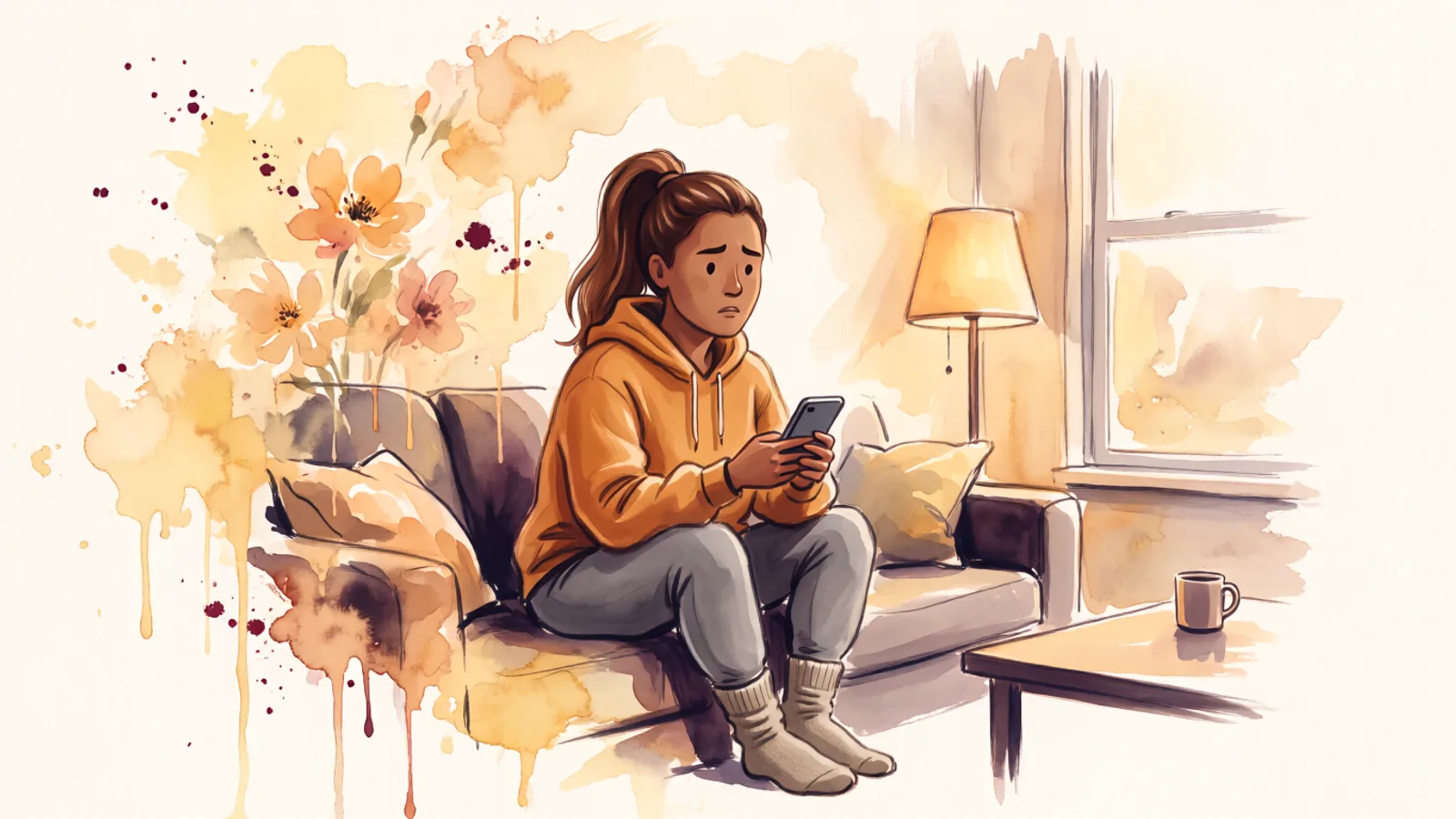
You run the opposite strategy to the same fear. When the push starts, your system turns up. In a large survey about breakups, people higher in attachment anxiety reported more distress, more preoccupation with the lost partner, and more effort to get the relationship back [3]. So the push doesn't feel like a pause to you. It feels like an emergency, and you move toward it: the follow-up text, the call, the essay at midnight.
Then the pull arrives as relief, and relief this strong starts to feel like love. You also recognise their panic, because you know what it's like to be scared of losing someone. That recognition makes you forgive fast.
The on-off research didn't measure attachment, but it fits. Lingering feelings were the main reason people got back together [5], and on-off partners reported more uncertainty and communication problems than partners who hadn't broken up and renewed; more renewals went with more negatives [4]. Your feelings are real. They're also the fuel the cycle runs on.
Surviving a push phase
When they pull away or end it, your urge is to fix it tonight. Don't negotiate a breakup at midnight. Send one calm message, then stop. No follow-ups, no "did i do something", no long text listing everything you'll change.
Give yourself 72 hours before you decide anything about what this means. In the breakup survey, people with more security turned to friends and family [3]. Do that on purpose. Call the friend who knows the whole story, not the one who'll tell you to text them back. Make plans for the evenings when the silence is loudest.
Write down what happened this time, with dates, while it's fresh. You'll want it in Week 9.
i hear you. i'm not going to argue tonight. take the space you need. i'm taking some too.
And the message you decide not to send:
(draft, not sent) please just tell me what i did and i'll fix it
Surviving a pull phase
When they come back, you're allowed to be glad. You don't have to pretend the last breakup didn't happen, and you don't have to punish them for it either. What you do need is time and a real conversation before you say yes.
Slow it down. Don't agree to anything big in the first two weeks: no keys, no trips, no "let's just pick up where we left off." Ask the questions the relief wants you to skip. What's different now? What happens the next time it gets this close? What will they do instead of ending it? Listen for a plan, not just a feeling. "i realised how much i love you" is a feeling. "when i start to panic i'll tell you i need a few days, and we won't break up over text" is a plan.
i'm really glad you reached out, and i missed you too. before we go back, i need to talk about what happens the next time it gets close. saturday, in person?
Getting off the cycle

The research on why on-off couples get back together points to two things you can change. Renewals were more likely when people were unsure what the breakup meant, and less likely when the breakup was mutual [5]. In partners' own accounts, staying in contact after a breakup kept the door open, so the breakup became a redefinition rather than an ending [6]. And cycling tends to repeat: people who had cycled were more likely to cycle again, even after moving in or marrying [7]. None of this means the cycle can't settle. It means the ending has to be real for anything to change.
- Count the cycles. Write down every breakup and return with dates. If this is the third round in six months, say that number out loud to yourself before the next yes.
- Make the next ending clear and shared. If it ends again, don't leave it at "i need space." Say plainly that it's over, and ask them to agree. A mutual, named ending gives neither of you the uncertainty the cycle needs.
- Set a no-contact boundary for the in-between. No late-night calls, no "just checking in", no sleeping together during a break. This boundary isn't a punishment. It's how a breakup stays a breakup.
- Decide your rule for returns while you're calm. For example: no getting back together in the same week they reach out, and not without the plan conversation from the pull phase. Write it down so 1:47 a.m. you can't rewrite it.
i care about you, and i'm done with breaking up and getting back together. if this ends, it ends. no calls in between.
i got your message. i'm not ready to talk about getting back together. if you want to talk properly, let's set a time next week, not tonight.
When to step off for good
- You've had the plan conversation, they agreed, and the next push came just as fast and ended the same way.
- The time between breakups is getting shorter, not longer.
- You spend the good weeks bracing for the next drop instead of enjoying them.
- You've stopped telling friends you're back together because you can't face the look.
Some on-off couples do settle into something steady. Some keep cycling for years. You don't have to wait to find out which one this is. Stepping off isn't a test to see if they'll chase you. It's a decision about what you're available for, and it's yours to make.
Sources (7)
- Bartholomew, K. (1990). Avoidance of intimacy: An attachment perspective. Journal of Social and Personal Relationships, 7(2), 147–178. https://doi.org/10.1177/0265407590072001 (abstract; accessed 2026-10-05)
- Granqvist, P., Sroufe, L. A., Dozier, M., Hesse, E., Steele, M., van IJzendoorn, M., Solomon, J., ... Duschinsky, R. (2017). Disorganized attachment in infancy: A review of the phenomenon and its implications for clinicians and policy-makers. Attachment & Human Development, 19(6), 534–558. https://doi.org/10.1080/14616734.2017.1354040 (accessed 2026-10-05)
- Davis, D., Shaver, P. R., & Vernon, M. L. (2003). Physical, emotional, and behavioral reactions to breaking up: The roles of gender, age, emotional involvement, and attachment style. Personality and Social Psychology Bulletin, 29(7), 871–884. https://doi.org/10.1177/0146167203029007006 (abstract; accessed 2026-10-05)
- Dailey, R. M., Pfiester, A., Jin, B., Beck, G., & Clark, G. (2009). On-again/off-again dating relationships: How are they different from other dating relationships? Personal Relationships, 16(1), 23–47. https://doi.org/10.1111/j.1475-6811.2009.01208.x (abstract; accessed 2026-10-05)
- Dailey, R. M., Jin, B., Pfiester, A., & Beck, G. (2011). On-again/off-again dating relationships: What keeps partners coming back? The Journal of Social Psychology, 151(4), 417–440. https://doi.org/10.1080/00224545.2010.503249 (abstract; accessed 2026-10-05)
- Dailey, R. M., Rossetto, K. R., Pfiester, A., & Surra, C. A. (2009). A qualitative analysis of on-again/off-again romantic relationships: "It's up and down, all around." Journal of Social and Personal Relationships, 26(4), 443–466. https://doi.org/10.1177/0265407509351035 (abstract; accessed 2026-10-05)
- Vennum, A., Lindstrom, R., Monk, J. K., & Adams, R. (2014). "It's complicated": The continuity and correlates of cycling in cohabiting and marital relationships. Journal of Social and Personal Relationships, 31(3), 410–430. https://doi.org/10.1177/0265407513501987 (abstract; accessed 2026-10-05)
Keep going
Anxious With a Fearful-Avoidant Partner: The Survival Guide
When your partner pulls you close and then pushes you away, your alarm goes off every time. How the loop works, and how to stop riding it.
Why: hand-picked as a companion
Dismissive-Avoidant Push-Pull, for an Anxious Partner: The Survival Guide
They fade out over weeks, go quiet for months, then text like nothing happened. Why the slow cycle hooks an anxious heart, and how to get…
Why: hand-picked as a companion
Fearful-Avoidant Push-Pull, for a Secure Partner: The Survival Guide
They end it, then they're back within weeks, sorry and sure. How to stay steady through the cycle without becoming the place it keeps…
Why: hand-picked as a companion
More like this
- Article The Push-Pull Cycle: Why Some Relationships Keep Ending and Restarting
- Guide Anxious With a Dismissive-Avoidant Partner: The Survival Guide
- Guide Dismissive-Avoidant With a Fearful-Avoidant Partner: The Survival Guide
- Guide Fearful-Avoidant Push-Pull, for a Dismissive Partner: The Survival Guide
- Guide Fearful-Avoidant Push-Pull, for a Fearful-Avoidant Partner: The Guide
- Guide Fearful-Avoidant With a Fearful-Avoidant Partner: The Survival Guide
- Guide Secure With a Fearful-Avoidant Partner: The Survival Guide
- Quiz Is your ex an avoidant?
- Term Hot and cold (push-pull)