
Article
The Anxious-Avoidant Trap: Why It Happens
One partner reaches for closeness. The other steps back. The reaching gets louder, the stepping back gets longer, and both end up certain they were right about each other. Online this loop has a name: the anxious-avoidant trap. It is one of the most searched ideas in attachment theory, and one of the most misread.
This article explains what the trap is, how the loop runs, why it is so hard to leave, what the research actually found about anxious and avoidant pairings, and why it so often ends in a breakup. It also covers why the pairing is a pattern and not a fate. It describes behaviour, not people. Neither side is the villain of the loop. Both are protecting themselves.
The anxious-avoidant trap, explained
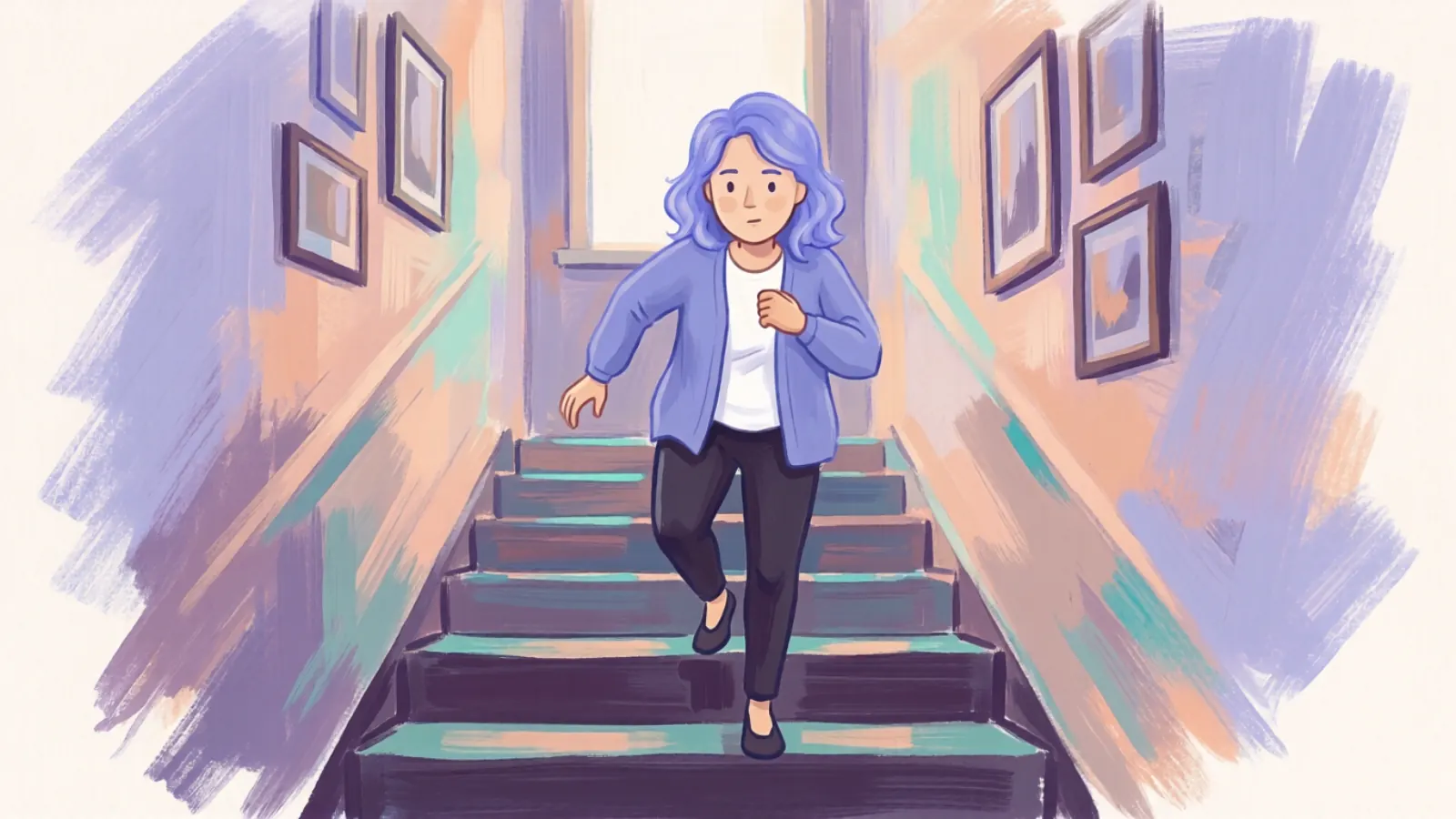
The "trap" is popular shorthand for a pairing in which one partner leans anxious and the other leans avoidant. The phrase comes from popular attachment writing, in particular Levine and Heller's 2010 book on adult attachment [6]. It is not a technical term in the research literature, though the pieces it describes are.
Attachment researchers describe two kinds of insecure strategy. Hyperactivating strategies turn attachment needs up: more checking, more reaching, more alarm when a partner seems far away. Deactivating strategies turn them down: more self-reliance, more distance, less talk of needs [1]. The anxious attachment pattern leans on the first. The avoidant pattern leans on the second, as in deactivating strategies.
The trap is what happens when the two meet. Each strategy is a reasonable response to a feeling of threat. Each one is also exactly what the other partner finds threatening. The closer one reaches, the more crowded the other feels. The further the other pulls back, the more abandoned the first feels. Neither partner is doing it to hurt the other. That is why the loop feels so personal and so hard to stop.
How the loop runs
The loop has four steps, and they repeat.
- A trigger. Closeness rises or falls. A plan is made, a plan is cancelled, a message goes unanswered, or the relationship gets more serious.
- A reaction. The anxious strategy turns up: texts, questions, requests for reassurance, a wish to talk now. The avoidant strategy turns down: quiet, space, a need to be alone, or a change of subject. The glossary calls the first set protest behaviour.
- The other partner's reaction to the reaction. The reaching reads as pressure, which turns the avoidant strategy up. The retreat reads as rejection, which turns the anxious strategy up.
- A reset. Eventually something gives. The reaching tires or the retreat eases, and a warm, relieved period follows. That relief is why the loop persists. It feels like proof that the relationship works, until the next trigger.
Researchers have a name for the interaction in the conflict literature: demand/withdraw. One partner pressures the other through emotional requests, criticism and complaints, and the other retreats through defensiveness and inaction [4]. That study was of marital conflict and did not measure attachment. It is nonetheless the clearest description of the chase-and-retreat loop. It also found that the roles shift with the topic: each spouse was more likely to demand when discussing a change they wanted and to withdraw when discussing a change the other wanted [4]. So the loop belongs to the situation as much as to the person.
Where the avoidant partner leans fearful instead of dismissive, the loop speeds up and the retreat is often preceded by a stretch of intense closeness. The push-pull cycle article covers that version.
Why the trap holds
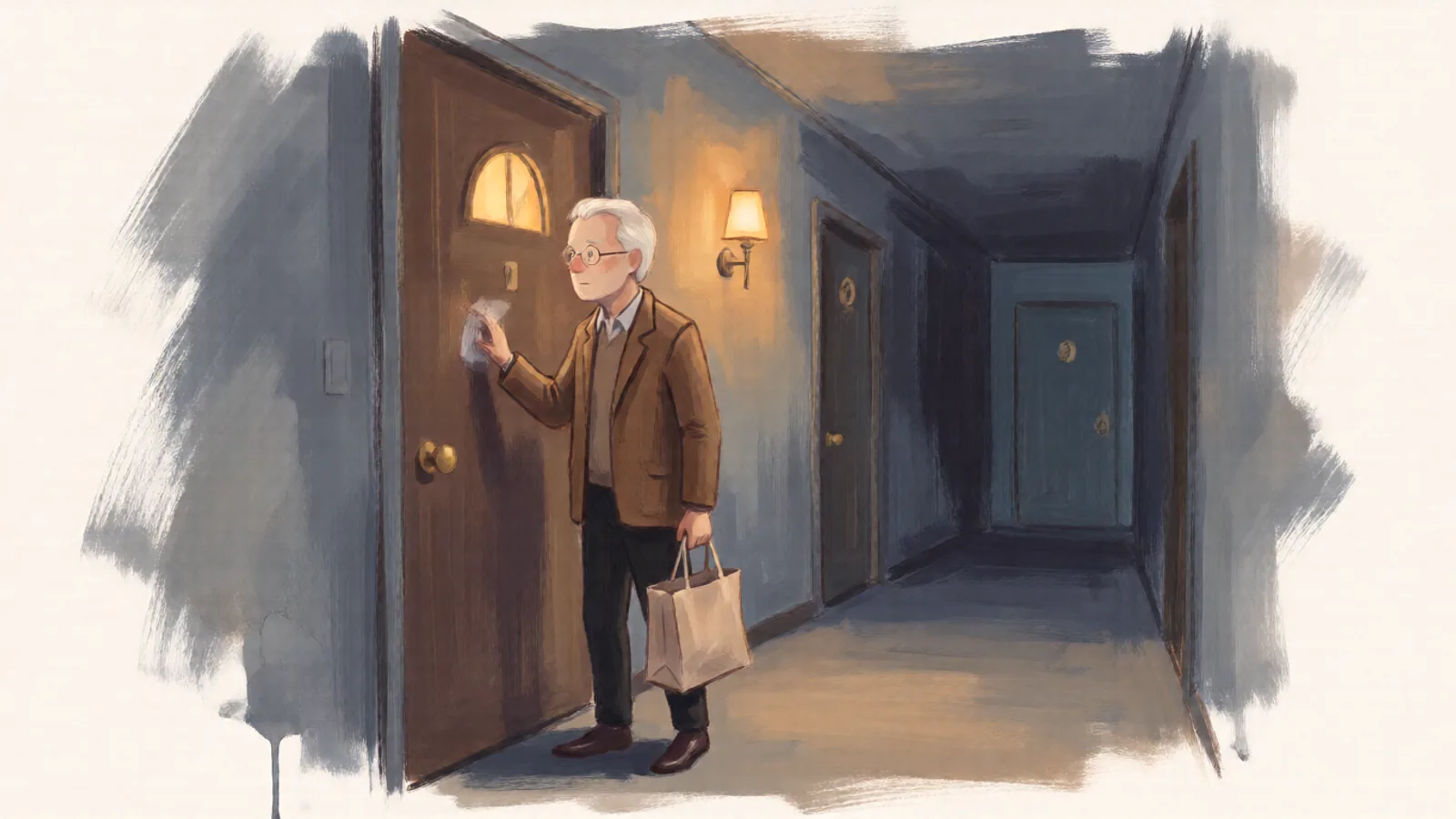
Several things keep the loop going.
It is self-confirming. The anxious strategy predicts abandonment. The avoidant strategy predicts engulfment. Each partner's behaviour produces the thing the other predicted. One study of dating couples had them discuss a major problem on video. More anxious people saw their partner and relationship less positively afterwards, and more avoidant men were rated as less warm and supportive [3]. The finding is from one sample, but it shows the loop can be seen from outside, and not only felt from inside.
The relief is strong. After a stretch of distance, a warm reunion feels like a rescue. Intermittent warmth is potent. That is one reason hot-and-cold dynamics, described in the glossary under hot and cold, are hard to walk away from.
Each strategy feels like the fix. The reaching partner thinks "if we just talked it through." The retreating partner thinks "if I just had some space." Each solution makes the other's problem worse.
The pairing can persist. In a study of 354 heterosexual dating couples, styles were not randomly paired: no anxious-anxious or avoidant-avoidant pairs were found, and relationships of avoidant men and anxious women were surprisingly stable over three years, even though both partners rated them relatively poorly at the start [2]. The finding does not say anxious partners are drawn to avoidant ones. It says the pairing occurs and can last while being rated poorly.
What the research found
What is well supported:
- Attachment anxiety and avoidance are real, measurable dimensions, and they relate to how people handle closeness and stress [1].
- Pairings of anxious and avoidant partners occur, and in at least one sample were stable over time [2].
- Chase-and-retreat conflict is a documented pattern [4].
What is thinner:
- Causation. The studies show who pairs and how they behave together. They do not show that anxiety and avoidance cause each other.
- Samples. The pairing study used one sample of dating couples from the early 1990s, with a three-category model of attachment [2]. The argument study used a small laboratory sample [3].
- The trap as a law. There is no evidence of a law that pulls anxious and avoidant partners together. That claim is popular shorthand.
And a caution from the largest study. An analysis of 43 longitudinal couples studies with more than 11,000 couples found that attachment avoidance and anxiety were among the top individual predictors of relationship quality, but a person's own perception of the relationship, such as how committed and appreciated they feel, predicted far more [5]. The style matters. How the relationship feels matters more.
The anxious-avoidant trap and breakups
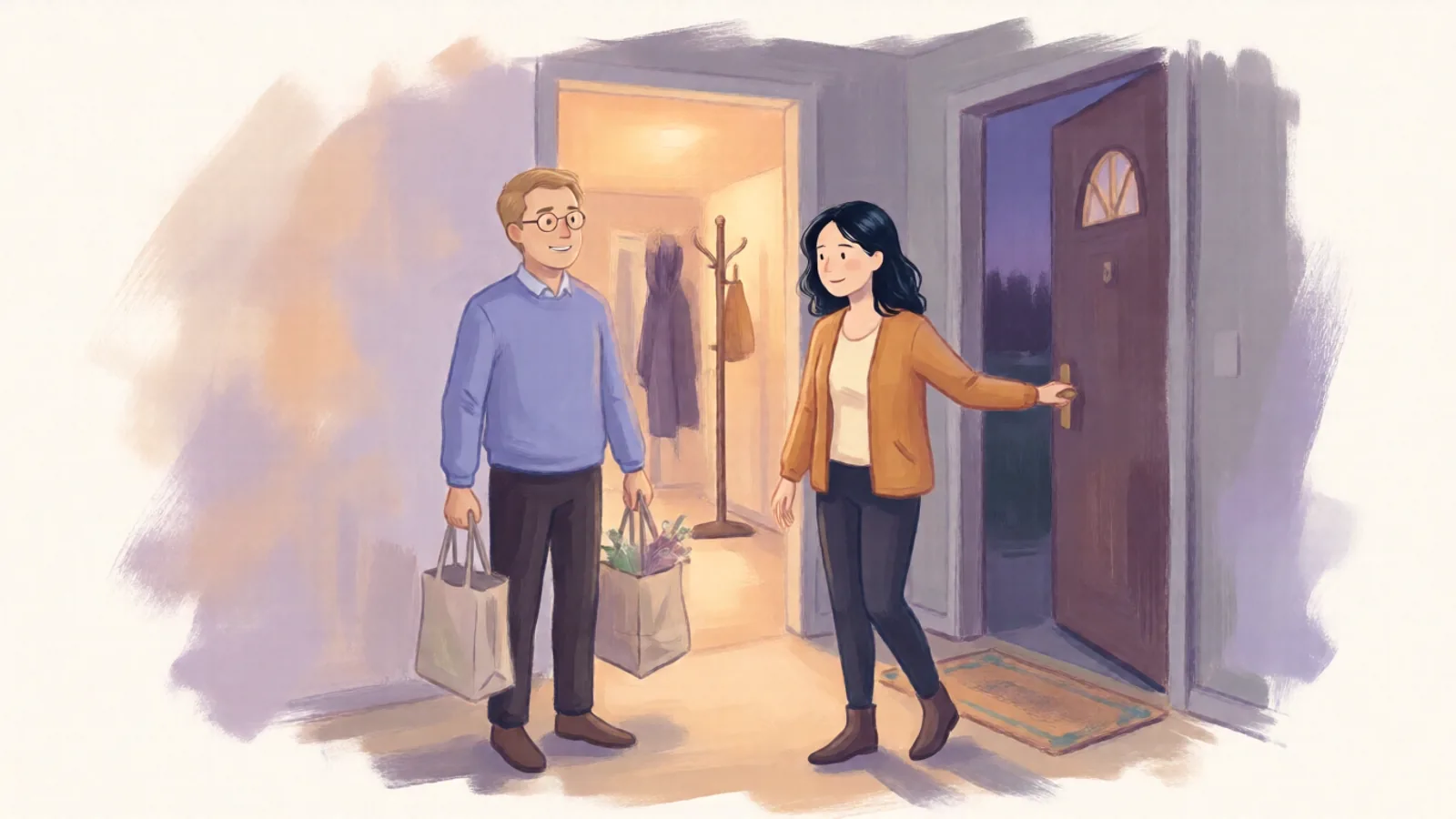
The trap often ends in a breakup, and the breakup often has the same shape as the loop. People higher in attachment anxiety tend to report more preoccupation with the lost partner, more distress and exaggerated attempts to reestablish the relationship. People higher in attachment avoidance tend to report less distress and more self-reliant coping [7]. That finding comes from an internet survey of more than 5,000 people and is self-reported, but it fits the loop: one side keeps reaching, the other keeps withdrawing, now across an ending.
In practice this can look like:
- One side sends messages, asks for closure or proposes to try again. The other goes quiet or answers briefly.
- The relationship ends, then restarts, then ends again.
- The avoidant side seems fine, while the anxious side cannot stop thinking about it.
- Months later, a message arrives, and the loop has another turn. The article on avoidant deactivation explains why distance can make closeness feel safe again.
It is worth saying plainly that a calm exit does not mean no feeling. The research describes less visible distress and a different way of coping, not an absence of attachment.
Why it isn't a life sentence
The trap is a pattern, not a destiny. Several findings point this way.
Insecure people's relationships depend on how their partners respond to them. Simpson and Overall review evidence that some partners "buffer" anxious or avoidant people, which helps them feel better and behave more constructively [8]. And the 43-study analysis found that how a relationship actually feels and works predicted far more than either person's style [5].
In practice, what tends to help is general: noticing the loop as a loop rather than as a fight about the topic, naming the strategy rather than the person, slowing the reaching and the retreating, and building enough steadiness to tolerate a pause. Whether that is possible depends on both partners wanting it. For one partner, staying may not be the best choice, and leaving is not a failure.
The guides cover the "what do I do" version for each side: anxious with a dismissive-avoidant partner, and the same pairing from the other side in the dismissive-avoidant with anxious guide. The attachment style quiz shows where a person sits on both scales, and the ex quiz looks at a past partner's pattern.
Sources (8)
- Mikulincer, M., & Shaver, P. R. (2003). The attachment behavioral system in adulthood: Activation, psychodynamics, and interpersonal processes. Advances in Experimental Social Psychology, 35, 53–152. https://doi.org/10.1016/S0065-2601(03)01002-5 (metadata only; accessed 2026-10-15)
- Kirkpatrick, L. A., & Davis, K. E. (1994). Attachment style, gender, and relationship stability: A longitudinal analysis. Journal of Personality and Social Psychology, 66(3), 502–512. https://doi.org/10.1037/0022-3514.66.3.502 (abstract; accessed 2026-10-15)
- Simpson, J. A., Rholes, W. S., & Phillips, D. (1996). Conflict in close relationships: An attachment perspective. Journal of Personality and Social Psychology, 71(5), 899–914. https://doi.org/10.1037/0022-3514.71.5.899 (abstract; accessed 2026-10-15)
- Christensen, A., & Heavey, C. L. (1990). Gender and social structure in the demand/withdraw pattern of marital conflict. Journal of Personality and Social Psychology, 59(1), 73–81. https://doi.org/10.1037/0022-3514.59.1.73 (abstract; accessed 2026-10-15)
- Joel, S., Eastwick, P. W., et al. (2020). Machine learning uncovers the most robust self-report predictors of relationship quality across 43 longitudinal couples studies. PNAS, 117(32), 19061–19071. https://doi.org/10.1073/pnas.1917036117 (abstract; accessed 2026-10-15)
- Levine, A., & Heller, R. S. F. (2010). Attached: The New Science of Adult Attachment and How It Can Help You Find—and Keep—Love. TarcherPerigee. https://openlibrary.org/works/OL16929630W (bibliographic record only; book not read; accessed 2026-10-15)
- Davis, D., Shaver, P. R., & Vernon, M. L. (2003). Physical, emotional, and behavioral reactions to breaking up: The roles of gender, age, emotional involvement, and attachment style. Personality and Social Psychology Bulletin, 29(7), 871–884. https://doi.org/10.1177/0146167203029007006 (abstract; accessed 2026-10-15)
- Simpson, J. A., & Overall, N. C. (2014). Partner buffering of attachment insecurity. Current Directions in Psychological Science, 23(1), 54–59. https://doi.org/10.1177/0963721413510933 (abstract; accessed 2026-10-15)
Keep going
Anxious With a Dismissive-Avoidant Partner: The Survival Guide
The more you reach, the more they pull back. Why the anxious-avoidant loop runs, what each of you needs, and how to step out of the chase.
Why: hand-picked as a companion
Dismissive-Avoidant Push-Pull, for an Anxious Partner: The Survival Guide
They fade out over weeks, go quiet for months, then text like nothing happened. Why the slow cycle hooks an anxious heart, and how to get…
Why: hand-picked as a companion
Dismissive-Avoidant With an Anxious Partner: The Survival Guide
You pull back to breathe. They reach harder. Here is how to take your space without leaving them in the dark, and how to stay when…
Why: hand-picked as a companion
More like this
- QuizIs your ex an avoidant?
- ArticleProtest behaviour: what it is and why you did it
- QuizWhat's your attachment style?
- GuideAnxious With an Anxious Partner: The Survival Guide
- TermAvoidant attachment
- TermDismissive-avoidant attachment
- TermDisorganized attachment
- TermFearful-avoidant attachment
- ArticleFearful vs Dismissive Avoidant: Key Differences